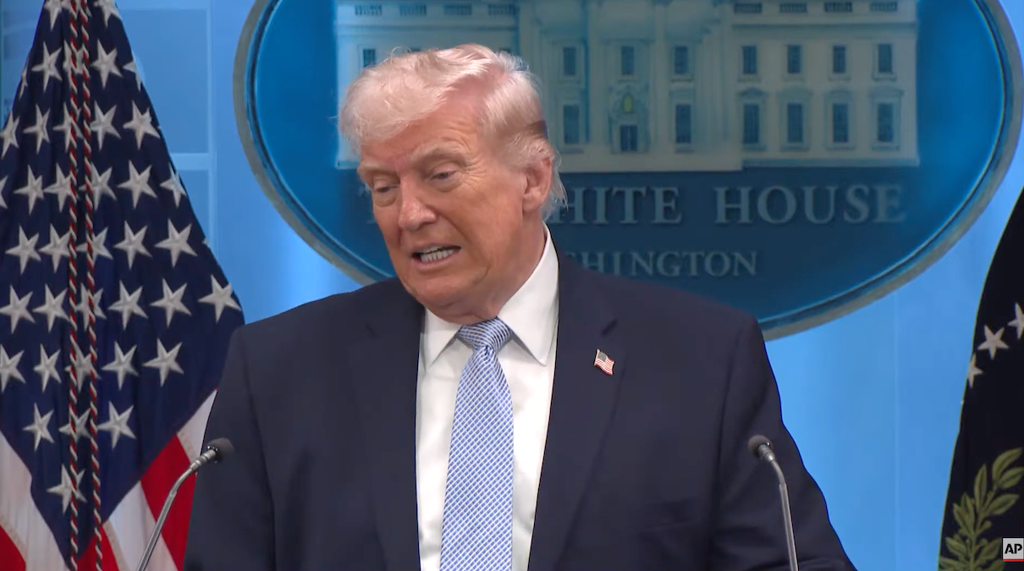
President Donald Trump announced a two-week ceasefire with Iran on Tuesday evening, following earlier threats to destroy the country. This ceasefire is contingent upon the immediate opening of the Strait of Hormuz, a vital waterway for global oil shipments that plays a significant role in international trade and energy supply.
Trump Announces Ceasefire with Iran Amid Heightened Rhetoric
The announcement comes amid escalating tensions and aggressive rhetoric from both sides, raising important questions about the implications for U.S. foreign policy and its moral standing on the world stage. Critics argue that such threats undermine the principles of just war and could lead to unnecessary civilian casualties, which would further complicate the already volatile situation in the region.
Background and Reactions
Earlier in the day, Trump warned that "a whole civilization will die tonight" if military action was taken against Iran. This alarming statement was made shortly before the ceasefire was brokered by Pakistan, a country that Trump credited for requesting a halt to military operations. The timing of the ceasefire has led to speculation about whether the deal was already in place before Trump's alarming comments were made public, suggesting a complex diplomatic backdrop.
In his announcement, Trump referred to a 10-point proposal from Iran, which he described as a "workable basis on which to negotiate." However, the details of this proposal have been publicly available for days and include demands such as reparations for Iran and the lifting of sanctions that have been imposed on the country. Critics question whether this proposal was genuinely new or simply a reiteration of previous demands that Iran has made in the past.
Trump's rhetoric has drawn significant criticism for its potential moral implications. John Daniel Davidson, a senior editor at The Federalist, argues that threatening mass destruction damages the moral conscience of the United States. He stated, "Making war directly on the Iranian people could never be morally justified," emphasizing that the intentional targeting of civilians would render any cause unjust, regardless of the circumstances.
Supporters of Trump's approach contend that his tough rhetoric is a negotiating tactic designed to intimidate Iran into compliance. They argue that such maximalist language is necessary to convey seriousness in diplomatic negotiations, especially when dealing with a regime that has historically been unyielding. However, Davidson counters that if the threats are perceived as empty or lacking credibility, they may not have the intended effect on Iranian leaders, potentially emboldening them instead.
The concept of just war, which has roots in Catholic doctrine, emphasizes the need for a just cause and moral conduct in warfare. This doctrine stipulates that wars must be fought for the right reasons and that non-combatants should not be targeted. Davidson notes that while Iran has failed to meet these criteria through its own actions, the focus should also be on the United States' conduct in any potential conflict, highlighting the dual responsibility of both parties in maintaining ethical standards in warfare.
Pope Leo, a vocal critic of the war, highlighted the moral dimensions of military action, stating, "This is truly not acceptable... attacks on civilian infrastructure are against international law, but it is also a sign of the hatred and division and destruction that human beings are capable of." His remarks contrast sharply with the aggressive language from the Trump administration, underscoring the need for a higher moral standard in warfare, especially in a situation as delicate as the one involving Iran.
As the situation develops, the balance between military strategy and moral responsibility remains a critical concern for U.S. leaders. The ceasefire may provide a temporary reprieve from immediate conflict, but the underlying tensions and the implications of Trump's rhetoric continue to pose significant challenges for American foreign policy. The international community will be watching closely to see how this situation unfolds and whether a more stable and peaceful resolution can be achieved in the long term.