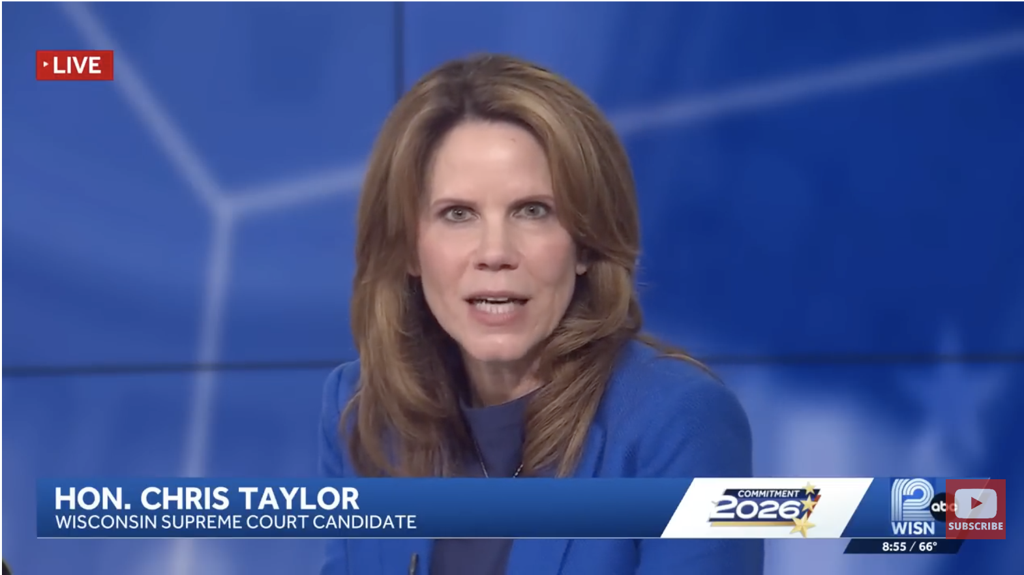
Chris Taylor, a judge on the Wisconsin District IV Court of Appeals, is campaigning for a seat on the Wisconsin Supreme Court in an election set for Tuesday. Taylor, who has a history of advocating for abortion rights and progressive policies, faces off against Maria Lazar, a judge on the state’s Third District Court of Appeals known for her conservative stance.
The election represents a significant ideological divide, with Taylor's supporters arguing for judicial independence and progressive values, while critics claim her past affiliations and policy positions indicate a potential bias in favor of liberal agendas.
Taylor previously served as the public policy director for Planned Parenthood and was a prominent member of the Wisconsin State Assembly, where she was recognized as one of its most liberal members. In contrast, Lazar has positioned herself as a constitutional conservative, having defended Republican Governor Scott Walker’s Act 10, which limited the power of public labor unions and reportedly saved taxpayers over $35 billion.
Campaign Financing and Support
The race has drawn considerable attention and funding, with Taylor reportedly raising over $5.5 million, significantly outpacing Lazar’s $904,538. Much of Taylor's funding has come from the Democratic Party of Wisconsin and various liberal political action committees, raising concerns among critics about the influence of outside money in the election.
Taylor’s campaign has focused on her judicial independence and her commitment to fighting for marginalized communities. However, critics argue that her financial backing from wealthy liberal donors undermines her claims of impartiality. “I’d love to write ‘Hell no,’” Taylor said at a recent event, referring to her opposition to certain conservative policies.
Ideological Differences
The candidates' contrasting views on key issues have become focal points in the campaign. Taylor has been vocal about her support for abortion rights, opposing measures that would limit access to the procedure. During a debate, Lazar criticized Taylor’s stance, stating, “Chris Taylor’s values are abortion up to birth, boys in girls sports, removing voter ID, and a radical left wing agenda.”
In addition to abortion rights, Taylor has advocated for policies that would make Wisconsin a sanctuary state for unauthorized immigrants, a move that has drawn criticism from conservative circles. Supporters of Taylor argue that her positions reflect the values of many Wisconsin voters, while opponents contend that her views are out of touch with the majority.
The Stakes of the Election
This election is particularly significant as it could shift the balance of power on the Wisconsin Supreme Court, currently held by a 4-3 liberal majority. If Taylor wins, it would solidify a 5-2 liberal majority, potentially impacting future rulings on contentious issues such as abortion, immigration, and labor rights.
While Taylor's campaign emphasizes her commitment to judicial independence, critics assert that her record suggests a willingness to legislate from the bench. “We need justices who tell the truth,” former Governor Scott Walker tweeted, referencing Taylor's past as a Democrat and her current claims of nonpartisanship.
As voters prepare to head to the polls, the outcome of this election could have lasting implications for Wisconsin’s judicial landscape and the direction of state policy. Both candidates have mobilized their bases, with Taylor relying heavily on her progressive supporters and Lazar appealing to conservative voters who prioritize traditional values and fiscal responsibility.
The election will not only determine the future of the Wisconsin Supreme Court but also serve as a barometer for the political climate in a key swing state ahead of the upcoming midterm elections.