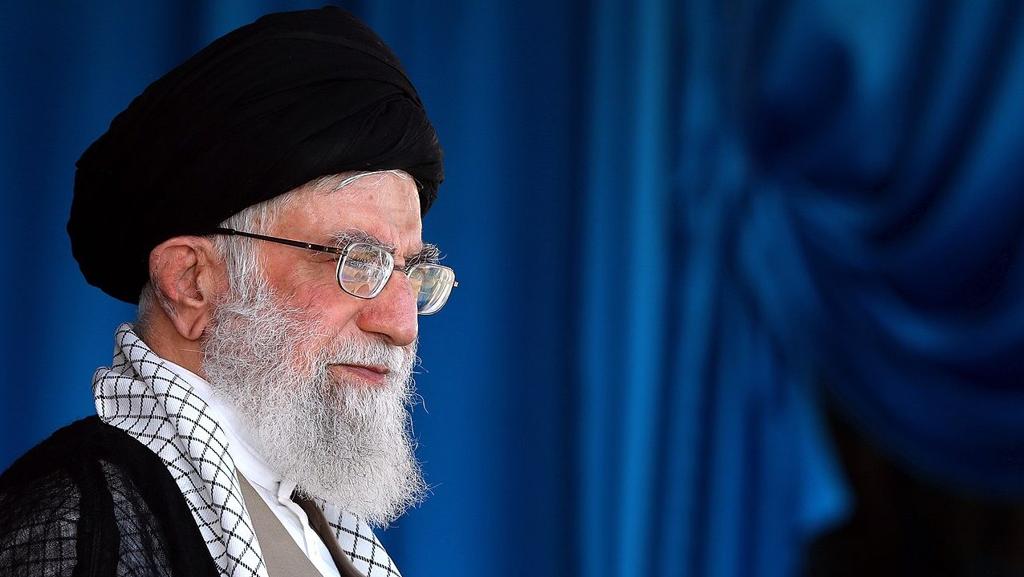
Ayatollah Ali Khamenei, Iran’s supreme leader for over three decades, was killed in an airstrike on Saturday, prompting renewed scrutiny of how major media outlets portray his legacy. Critics argue that the obituaries published by The New York Times and The Washington Post fail to adequately address the brutality of his regime, instead opting for a more humanized depiction.
The tension lies in the contrasting narratives surrounding Khamenei’s rule, which included widespread executions and repression, and the media’s framing of him as a cultural figure with a modest lifestyle. This divergence raises questions about editorial judgment and the responsibilities of legacy media in reporting on authoritarian figures.
Khamenei’s death comes shortly after his regime oversaw the execution of thousands of Iranians who protested against his rule. His leadership was marked by severe human rights abuses, including censorship and the sponsorship of terrorism. Despite this, his portrayal in obituaries has drawn criticism for focusing on his personal attributes rather than his political actions.
Media Portrayals
In a Washington Post obituary, writer William Branigin described Khamenei as “Iran’s supreme leader” who “is dead at 86,” emphasizing his role in the Islamic revolution and his presidency in the 1980s. The article highlights Khamenei’s “bushy white beard and easy smile,” presenting him as a more approachable figure compared to his predecessor, Ayatollah Khomeini. However, critics note that this description glosses over the severe repression and violence that characterized his rule.
Branigin also mentioned Khamenei’s literary interests, stating he was fond of Persian poetry and Western novels, while downplaying the extensive human rights violations associated with his leadership. The obituary includes a quote from Khamenei, where he referred to himself as a man “with many faults and shortcomings,” which some argue detracts from the gravity of his actions.
Similarly, The New York Times’ obituary by Alan Cowell and Farnaz Fassihi referred to Khamenei as a “Hard-Line Cleric Who Made Iran a Regional Power.” While acknowledging that he “brutally crushed dissent at home,” the article also noted that he “for the most part” avoided direct military confrontation with the United States and Israel. Critics argue that this framing minimizes the impact of his oppressive policies.
Criticism of Editorial Choices
The choice of language in these obituaries has sparked backlash. Critics assert that terms like “hard-line cleric” could easily be replaced with more accurate descriptors such as “brutal dictator” or “terrorist.” The emphasis on Khamenei’s modest upbringing and lifestyle choices has been seen as an attempt to humanize a leader responsible for significant suffering.
The Times also highlighted Khamenei’s refusal to allow the importation of COVID vaccines, which resulted in over 100,000 deaths in Iran. However, critics argue that focusing on this issue rather than the broader context of executions and torture reflects a troubling editorial bias.
Supporters of the media's approach argue that it is important to provide a nuanced view of complex figures, suggesting that focusing solely on negative aspects can lead to a one-dimensional understanding of history. However, this perspective has not been widely articulated in response to the criticism of the obituaries.
Conclusion
As the obituaries of Ayatollah Khamenei circulate, they serve as a reminder of the ongoing debate over how media outlets report on authoritarian leaders. The contrasting narratives highlight the challenges of balancing historical context with the need for accurate representation of human rights abuses. While some argue for a more critical approach, others advocate for a nuanced understanding of complex political figures. The legacy of Khamenei, marked by both cultural contributions and severe repression, continues to provoke discussion about the responsibilities of the press in shaping public perception.