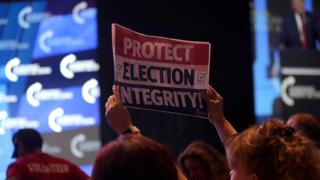
The North Carolina State Election Board has reached an agreement to rectify thousands of voter registrations that lack federally mandated identifying information. This decision was prompted by a lawsuit from the Republican National Committee (RNC), highlighting ongoing concerns about election integrity in the state. The agreement comes nearly two years after initial concerns were raised regarding the validity of these registrations, which could significantly impact the electoral process in North Carolina.
Explainer Election Integrity: Protecting Voter Rights in Modern America
The central issue at hand revolves around compliance with the Help America Vote Act (HAVA). This federal law requires voters to provide either a driver’s license number or the last four digits of their Social Security number when registering to vote. Critics of the board's previous practices argue that the failure to collect this essential information undermines the integrity of the electoral process. Conversely, supporters of the board's earlier methods contend that the issue was not adequately addressed until the recent legal actions brought it to light.
Since its enactment in 2004, HAVA has mandated that states verify the eligibility of prospective voters by collecting specific identification information. In North Carolina, it was discovered that as many as 195,000 individuals were listed on the voter rolls without the required ID numbers. The state election board is now tasked with verifying this information against its Motor Vehicle Administration database or by using the last four digits of a Social Security number, along with the voter’s name and date of birth.
Registration Issues
The North Carolina State Election Board's previous registration forms contributed significantly to the problem. These forms did not clearly indicate that providing a driver’s license number or Social Security number was mandatory for voter registration. Activists advocating for election integrity have raised alarms, claiming that up to 225,000 registered voters were missing this critical information. In response to these concerns, the state has committed to updating its registration form in 2024 to ensure clarity on this requirement.
Despite these planned updates, the board has faced criticism for its inaction leading up to the upcoming 2024 elections. Reports indicate that the board was aware of the incomplete registrations as early as 2023 but did not take significant steps to address the issue until the RNC filed its lawsuit. RNC Chairman Joe Gruters stated, "For too long, North Carolina’s State Board of Elections failed to meet basic safeguards that protect our elections," emphasizing the need for stricter adherence to the law and accountability in the electoral process.
Legal Actions and Agreements
The RNC's lawsuit was not the only legal challenge faced by the state election board; the Department of Justice also filed a separate lawsuit regarding the same issue of missing identification information. The recent agreement stipulates that the board will no longer accept voter registration forms that do not include the required identification information. Furthermore, the board is now obligated to retrieve this information from voters who initially failed to provide it during their registration process.
Under the terms of the agreement, voters who do not provide the necessary ID or fill in the checkbox by the deadline for “curing” a ballot will have their votes excluded from local and statewide elections. However, it is important to note that these voters will still be permitted to vote in federal elections, ensuring that they retain some level of participation in the electoral process.
While the RNC has hailed the agreement as a significant victory for election integrity, some critics argue that the board's previous inaction reflects a broader issue of accountability within the electoral system. Supporters of the board's past practices have not publicly commented on the recent developments, leaving some questions about the motivations behind the changes and the implications for future electoral policies.
Moving Forward
The North Carolina State Election Board's commitment to rectify the voter registration issues marks a critical step toward ensuring compliance with federal law. As the state prepares for the upcoming elections, the focus will remain on how effectively these changes can be implemented and whether they will restore public confidence in the electoral process. The implications of this agreement extend beyond North Carolina, as it highlights ongoing national debates about voter registration practices and election integrity. As states across the country grapple with similar issues, the outcomes of these legal challenges may influence future policies and practices in other jurisdictions, shaping the landscape of electoral integrity nationwide.