Texas Secretary of State Jane Nelson announced that her office has identified 2,724 individuals on the state's voter rolls who may not be U.S. citizens. This finding comes after a comparison of the state's voter registration list with citizenship data from the U.S. Citizenship and Immigration Services' SAVE database, which was made accessible to states during the Trump administration.
Explainer Election Integrity: Protecting Voter Rights in Modern America
Nelson stated, "The Trump Administration’s decision to give states free and direct access to this data set for the first time has been a game changer." She emphasized the importance of maintaining accurate voter lists and verifying the citizenship of those registered to vote.
The names of the potential noncitizens have been forwarded to Texas counties for further investigation. If any individual is confirmed to be a noncitizen, their case will be referred to the Office of Attorney General. Nelson reiterated, "Only eligible United States citizens may participate in our elections."
Individuals identified as potential noncitizens will have 30 days to provide proof of citizenship. Failure to do so will result in the cancellation of their voter registration, although they may have their registration reinstated if they later provide the necessary documentation.
Nelson also highlighted the need for legislative action, urging Democrats to support the Safeguarding American Voter Eligibility (SAVE) Act. This proposed legislation would mandate documentary proof of citizenship for voter registration, addressing concerns about noncitizen voting.
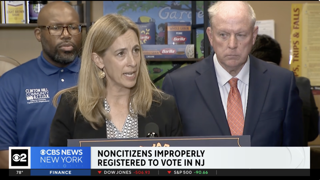
While noncitizen voting in federal elections is illegal, instances of noncitizens appearing on voter rolls have been documented. In 2016, 41 noncitizens voted in North Carolina, and in 2019, Pennsylvania removed 11,198 noncitizens from its voter rolls. A recent incident involved a Chinese college student who cast an illegal vote during the 2024 election cycle.
A Georgia audit found 20 noncitizens registered to vote, with nearly half having cast ballots in previous elections. Oregon also reported discovering nine noncitizens who had voted after identifying over 300 erroneous registrations.
The identification of potential noncitizens on Texas voter rolls raises ongoing concerns about election integrity and the effectiveness of current voter registration processes.