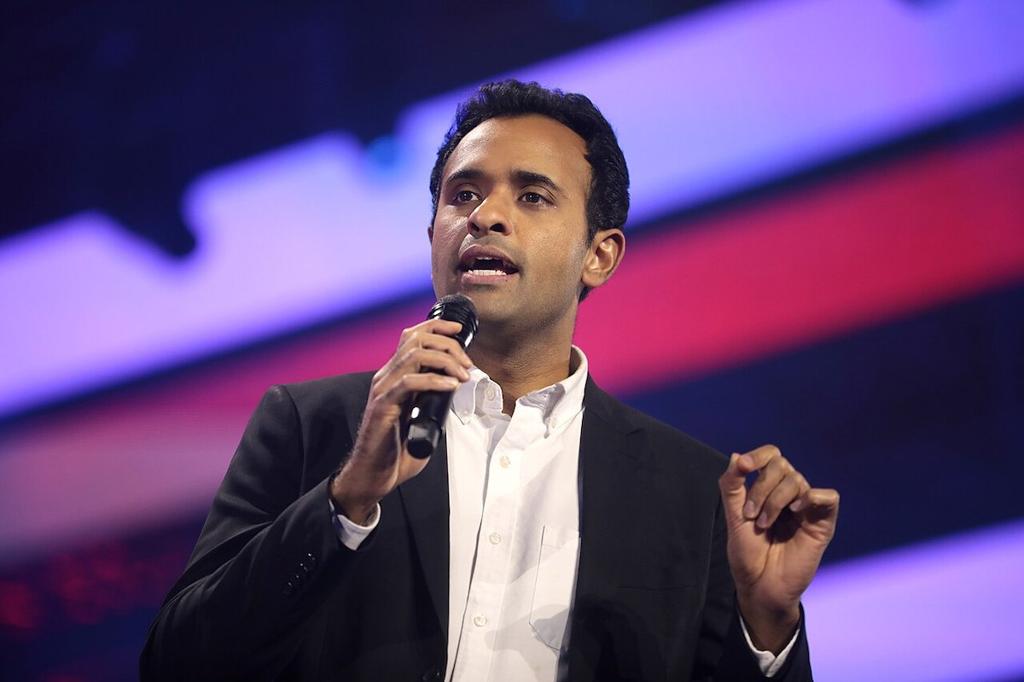
A recent op-ed by Vivek Ramaswamy in The New York Times has sparked a contentious debate on the nature of American identity, with implications for citizenship and cultural belonging. Ramaswamy argues that being an American is defined by adherence to a set of principles rather than lineage or cultural heritage, a stance that has drawn both support and criticism from various factions within the political landscape.
The core tension centers on whether American identity is a matter of shared beliefs or if it is rooted in a specific cultural and historical context. Ramaswamy asserts that anyone who agrees to key principles, such as the rule of law and freedom of expression, can be considered an American, regardless of their background. Critics, however, argue that this view oversimplifies a complex identity that is intertwined with the nation's history and cultural practices.
Historically, the narrative surrounding American identity has evolved significantly. After World War II, the dominant view promoted by mainstream institutions suggested that America was a "creedal" nation, open to anyone who professed its ideals. This perspective gained traction throughout the latter half of the 20th century, culminating in the widely accepted notion that America is a "nation of immigrants."
In his op-ed, Ramaswamy contends, "Americanness isn’t a scalar quality that varies based on your ancestry. It’s binary: Either you’re an American or you’re not." He emphasizes that citizenship should be based on a commitment to the principles outlined in the U.S. Constitution and the American dream, rather than on ethnic or cultural lineage. Ramaswamy's argument positions him against what he describes as a growing "blood-and-soil" ideology on the right, which he claims seeks to define Americanness through ancestry.
Cultural Context and Historical Roots
Critics of Ramaswamy's viewpoint, including some conservative commentators, argue that he misrepresents the position of those who believe that American identity encompasses both a set of ideals and a shared cultural heritage. They assert that it is essential to recognize America as a nation with a specific history and culture, which includes English and Christian influences. This perspective suggests that while the principles of democracy and individual rights are important, they cannot be fully understood without acknowledging the cultural context from which they emerged.
As one critic noted, "The ideas articulated in those documents are not as universal as we have been led to believe." This sentiment reflects a belief that American identity is not merely a collection of abstract principles but is deeply rooted in the customs and traditions of a particular people.
Ramaswamy's critics further argue that reducing American identity to a set of beliefs risks rendering it insubstantial. They warn that if citizenship can be granted solely based on an agreement to certain principles, then the essence of what it means to be American could become diluted. This concern raises questions about the implications of such a view for immigration policy and national cohesion.
Implications for Immigration Policy
The debate over Ramaswamy's interpretation of American identity also intersects with discussions about immigration. Critics argue that if anyone can be considered an American simply by professing allegiance to the Constitution, it could lead to an influx of individuals from diverse cultural backgrounds who may not assimilate into American society. Ramaswamy's critics contend that this perspective overlooks the complexities of cultural integration and the challenges posed by differing customs and practices.
Ramaswamy's approach has drawn comparisons to the views of certain corporate elites who prioritize economic considerations over cultural values. Critics assert that this mindset treats American citizens as interchangeable labor inputs, undermining the notion of a cohesive national identity. They argue that such a perspective fails to address the potential consequences of mass immigration on American culture and social fabric.
While Ramaswamy's op-ed has garnered attention, responses from supporters of his views have been limited. Some proponents argue that his perspective reflects a necessary evolution in understanding American identity in a globalized world. However, the lack of robust counterarguments from his supporters highlights the contentious nature of this debate.
As the discussion continues, it remains to be seen how these differing views on American identity will influence broader conversations about citizenship, immigration, and national unity. The stakes are high, as the outcome of this debate could shape the future of American identity in an increasingly diverse society.