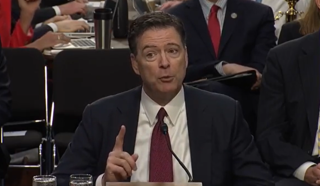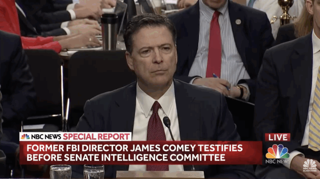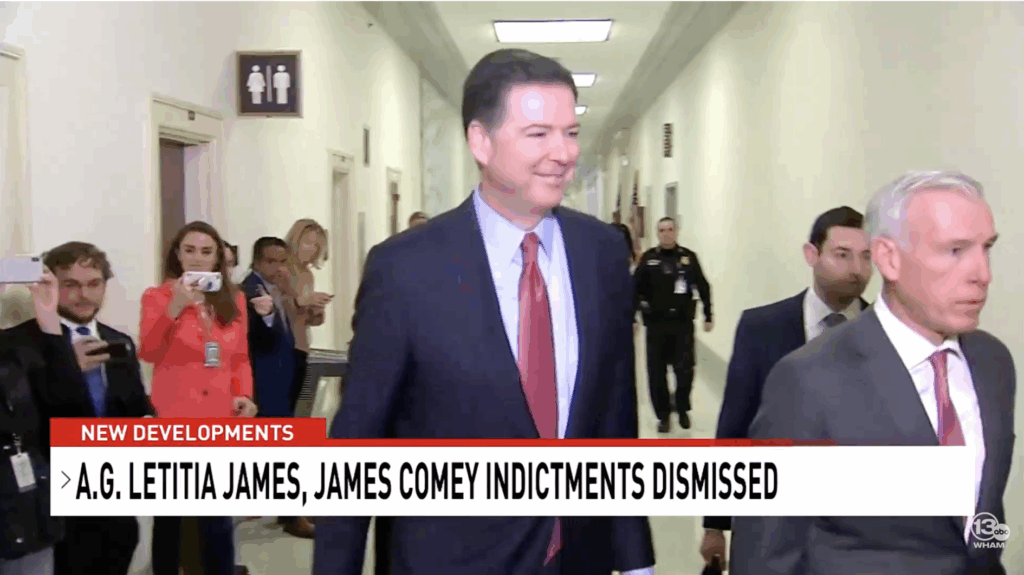
A federal judge dismissed indictments against former FBI Director James Comey and New York Attorney General Letitia James on procedural grounds, igniting controversy over judicial authority and political bias. Judge Cameron Currie, nominated by President Bill Clinton, ruled that the appointment of Lindsey Halligan as interim U.S. attorney was invalid, thereby nullifying the indictments against both figures. The Department of Justice plans to appeal Currie's decision in the U.S. Court of Appeals for the Fourth Circuit, as similar rulings are being contested in other circuits.
Why a federal judge threw out the indictments
Currie stated that Halligan, who had no prior prosecutorial experience, was improperly appointed by Attorney General Pam Bondi. In her ruling, Currie noted that Halligan had secured indictments against Comey for allegedly lying to Congress and obstructing a congressional proceeding. The judge's dismissal has drawn criticism from legal experts who argue that her interpretation of the law may not withstand scrutiny in higher courts.
Will Chamberlain, a senior counsel at the Article Three Project, expressed confidence that Currie's ruling would be reversed, stating, "She got it wrong, quite clearly, and will almost certainly be reversed." This sentiment was echoed by Mike Davis, founder of the Article III Project, who criticized the ruling as part of a broader campaign to weaponize justice against political opponents.
What Comey and James were accused of
The indictments against Comey and James stem from allegations of misconduct related to their respective roles in high-profile investigations. Comey was indicted in September for his testimony regarding the Russia investigation, while James faced charges related to her mortgage application. Both individuals have denied wrongdoing.
Critics say the ruling reflects partisan bias
Critics of Currie's ruling argue that it reflects a partisan bias within the judiciary. Davis claimed that the judge's decision was influenced by political affiliations, stating, "What is the Democrats’ response? Unsurprisingly, an Obama judge hand-selected a Clinton judge." Legal analyst Keith Gross also criticized the ruling, suggesting that it represents an abuse of judicial power that undermines the executive branch's authority.
The fight over U.S. attorney appointments and separation of powers
The legal framework surrounding U.S. attorney appointments has been a point of contention. Section 546 of the U.S. Code allows the attorney general to appoint interim U.S. attorneys, but critics argue that this law infringes on the executive branch's prerogatives. Gross emphasized the need for the Supreme Court to clarify the limits of judicial authority in such matters, asserting that all executive power should reside within the executive branch.
The implications of Currie's ruling extend beyond the immediate cases of Comey and James. It raises questions about the integrity of the judicial system and the potential for political influence in legal proceedings. White House Press Secretary Karoline Leavitt characterized the ruling as an attempt to shield Comey and James from accountability, further fueling the narrative of a dual justice system in America.
What happens next in the appeals process
As the DOJ prepares to challenge Currie's decision, the outcome of the appeal could set significant precedents regarding the balance of power among the branches of government. Legal experts and political analysts are closely monitoring the situation, as it may have lasting effects on the judicial landscape and the ongoing discourse surrounding justice and accountability in the United States.