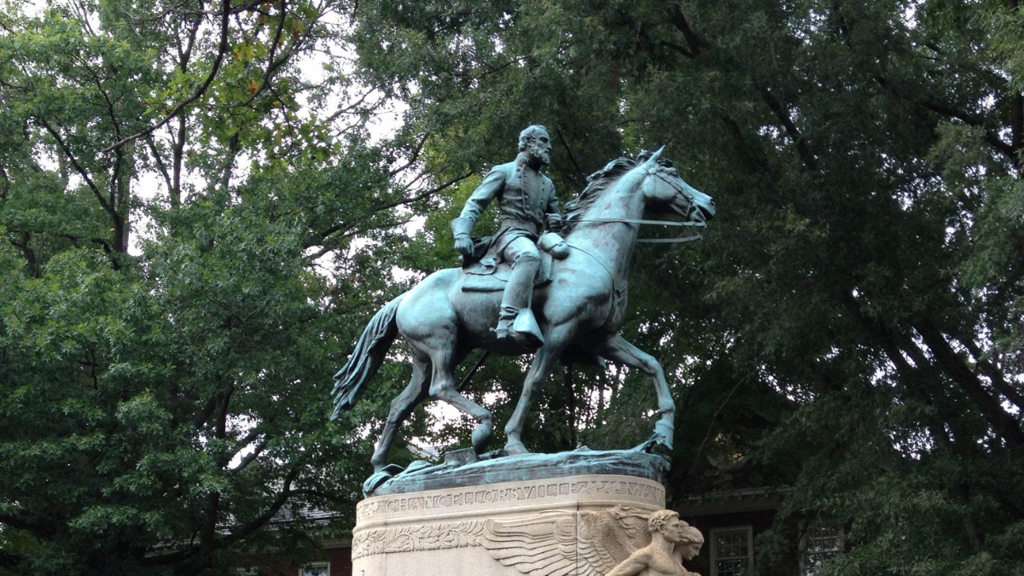
A new art exhibit in Los Angeles showcases a dismembered statue of Confederate General Thomas “Stonewall” Jackson, which has been altered to depict a grotesque version of the original. This piece is part of a larger exhibition titled "Monuments," presented by the Museum of Contemporary Art and the Brick gallery, which also features other damaged Confederate memorials.
The Jackson statue was removed from downtown Charlottesville, Virginia, in 2021, following a city council decision four years earlier. Its counterpart, a statue of General Robert E. Lee, was melted down in 2023, a process that was conducted in secrecy and later publicized, highlighting the contentious nature of these monuments.
The altered Jackson statue now features a severed head, which hangs from the top of the structure, resembling a modern interpretation of historical defeat. The exhibit also includes other Confederate monuments, such as the Confederate Soldiers and Sailors Monument from Baltimore, which remains covered in red paint, and a dual statue of Lee and Jackson with the words "BEWARE TRAITORS" spray-painted on it.
Hamza Walker, director of the Brick gallery, described the exhibit as an opportunity to reclaim these monuments. He stated that the exhibit was essentially an "excuse to get one of those things"—referring to the canceled Confederate monuments—"into Kara’s hands." Artist Kara Walker, who worked on the Jackson statue, referred to her approach as a "gruesome beheading" of the statue, which received applause from onlookers.
Critics of the exhibit argue that it represents a broader cultural movement that seeks to dismantle historical narratives associated with American figures, including not only Confederate leaders but also Founding Fathers like Thomas Jefferson and Abraham Lincoln. A New York Times review characterized the original statues as "works of Jim Crow-era propaganda," suggesting that their transformation into modern art reflects ongoing societal tensions.
Jason Farago, the Times’ art critic, noted that the exhibit confronts past and present hatreds with "startling confidence." However, some commentators, including John Daniel Davidson, contend that the exhibit itself embodies contemporary animosities directed at those who wish to preserve these monuments. Davidson described the display as a "monument to hatred" aimed at the country and its citizens.
The exhibit has sparked discussions about the role of public art and the legacy of historical figures in America. As debates continue over the appropriateness of such displays, the Jackson statue serves as a focal point for discussions about cultural memory and the interpretation of history in the public sphere.