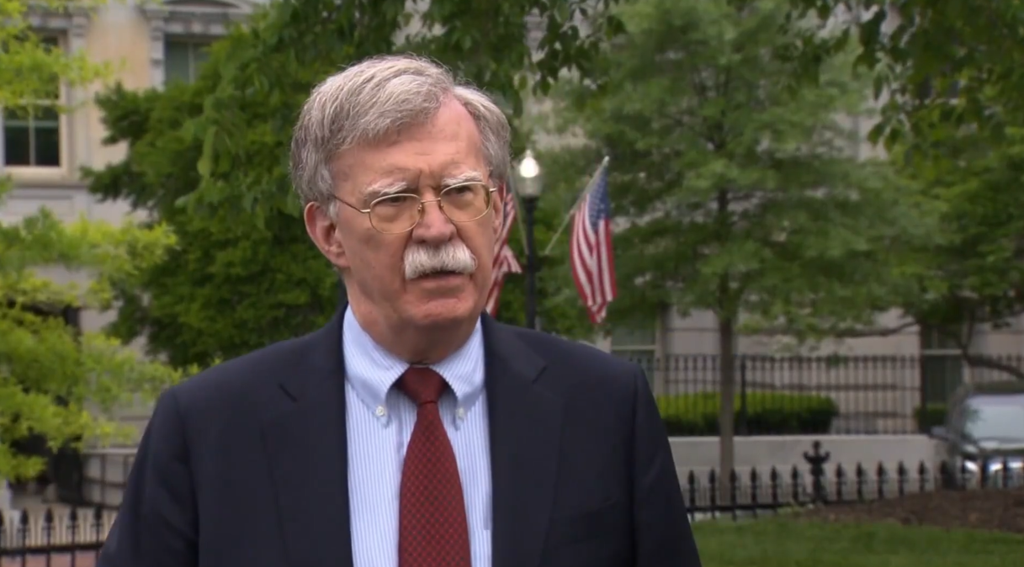
President Donald Trump’s former National Security Advisor John Bolton was indicted Thursday on 18 charges related to his alleged leaking of national secrets while he wrote a book about his work in the White House.
The charges include eight counts of transmission of national defense information and ten counts of retention of national defense information.
Bolton served as national security advisor from April 9, 2018, to September 10, 2019, during which he had access to highly classified national secrets. To obtain a Top Secret/SCI security clearance, Bolton signed documents promising to never divulge classified information without prior written authorization from relevant government agencies.
In September 2018, the federal government installed a Sensitive Compartmented Information Facility (SCIF) in Bolton's Maryland home to facilitate his access to national defense information. Following the end of his term in October 2019, Bolton’s home was decertified as an SCI facility, meaning he should not have retained classified documents there.
According to the indictment, between April 9, 2019, and August 22, 2025, Bolton allegedly abused his position by sharing over a thousand pages of information about his daily activities as National Security Advisor with two unauthorized individuals, described as related to him. According to the indictment, between April 9, 2019, and August 22, 2025, Bolton allegedly abused his position by sharing over a thousand pages of information about his daily activities as National Security Advisor with two unauthorized individuals, described as related to him.
While in office, Bolton reportedly sent “diary-like entries” (CourtListener) detailing his work to these individuals using a commercial messaging application and sometimes through his AOL or Google accounts.
After leaving government service, Bolton's personal email account was hacked by a cyber actor believed to be associated with Iran, gaining unauthorized access to classified information. A representative for Bolton informed the government about the hack but did not disclose that the account contained classified materials.
The indictment also notes that Bolton may have communicated verbally with one of the individuals he sent diary entries to, rather than documenting everything in writing.
The day after Bolton's tenure ended, a literary agent representing him contacted a book publisher to pitch a memoir titled "The Room Where It Happened: A White House Memoir," (CourtListener) which purportedly included Bolton's impressions and direct quotes based on contemporaneous notes.
The classified documents Bolton is accused of transmitting reportedly contained sensitive information, including intelligence about future attacks by adversarial groups, missile launch plans, and covert actions conducted by the U.S. government.
Bolton has previously criticized Trump for mishandling classified documents, raising questions about the implications of his own indictment for similar offenses.