Last week, President Donald Trump announced that Israel and Hamas had signed off on the first phase of his Gaza peace plan — one of the most significant diplomatic breakthroughs in the Middle East in years. For our nation and the world, this was a moment of rare convergence, of both clarity and action.
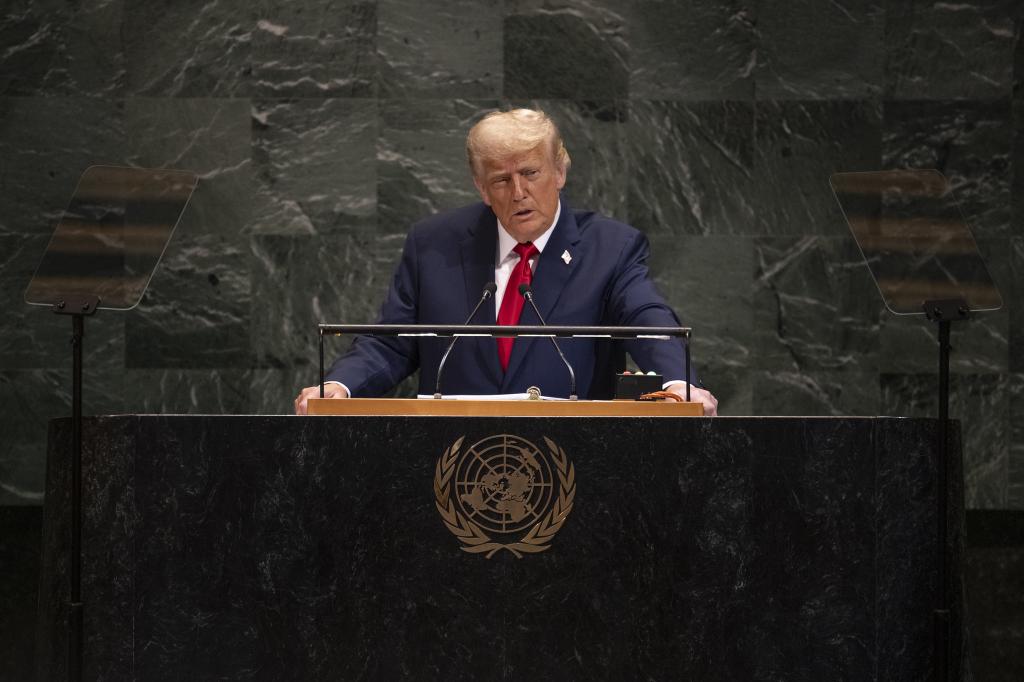
While much of the world has grown accustomed to the language of stalemate and moral equivocation, Trump’s foreign policy achievements underscore a deeper principle that realism and prudence are themselves instruments of peace. His most recent address to the United Nations General Assembly reflected the same conviction. It was not the speech of a diplomat pandering to anyone, but of a statesman determined to reassert that truth-telling is the first act of order.
"Statecraft is not about crafting the perfect phrase to win applause in a chamber of diplomats, but about shaping incentives, deterring aggression."
— Donald Trump, President of the United States
Instead of masking hard truths in euphemisms, Trump offered a direct summons — that candid, realistic assessments of the world must precede our return to civilizational greatness. His address exemplified the essence of statecraft: speaking what we know is true (what many dare not say) and turning uncomfortable realities into a foundation for decisive action. In Trump’s realism, the statesman’s first task is not to flatter but to prepare, not to admire decline but to arrest it.
Far from just rhetoric, his words are a testament to the civic habits needed to preserve the West: fidelity to inheritance and the sacrificial courage to act on hard truths. This is about the art of rhetoric and even statecraft in a fallen world. There will always be evil, wrongs, and harsh realities to speak about. Statecraft is not about crafting the perfect phrase to win applause in a chamber of diplomats, but about shaping incentives, deterring aggression, and, especially now, safeguarding a people’s inheritance. President Trump understands that the U.N. stage is the opportune moment to state a realistic assessment of decay while summoning the resolve for repair.
We saw what happened when the U.S. had a leader with the opposite approach on the U.N. stage: Problems were not named and thus went unsolved. Delicate euphemism and abstractions in speech accelerate societal erosion. The Biden years marked in America what our allies in Europe experience regularly from Brussels bureaucrats. The point is not to delight in provocation but to catalyze responsibility.
The immigration issue shows that forming humane legislation must first acknowledge the evil that cartels and human traffickers pose. Trump’s blunt recounting of horrors experienced by migrants on migration routes — including rape, slavery, death, and exploitation — revealed the unspeakable suffering inherent to mass migration that is often ignored. But it must be said, because it’s true, regardless of how unfashionable it is.
We should not be surprised that President Trump’s rhetoric is used not just to defend border enforcement but also energy independence. As the president underscored, energy is another decisive test of whether we will choose realism or delusion. In naming the fallacy of embracing green-energy absolutism, he made clear that no amount of self-imposed pain in the United States or Europe will solve the problem if nations like China, the world’s largest polluter, continue to operate without accountability. This practical candor requires that we stop pretending unilateral sacrifice is virtue, which leftists across the West do, sacrificing their citizens’ needs for affordable, reliable power.
If we are to properly set the conditions for a civilizational rebirth, we must accept that realistic rhetoric is the statecraft needed for renewal. Only then will the heirs of our age be able to pass forward a civilization worthy of the sacrifice of those who came before.