TLT Explains
Senate Republicans Face Criticism Over Immigration Funding and Accountability Measures Amid Internal Divisions
What's happening
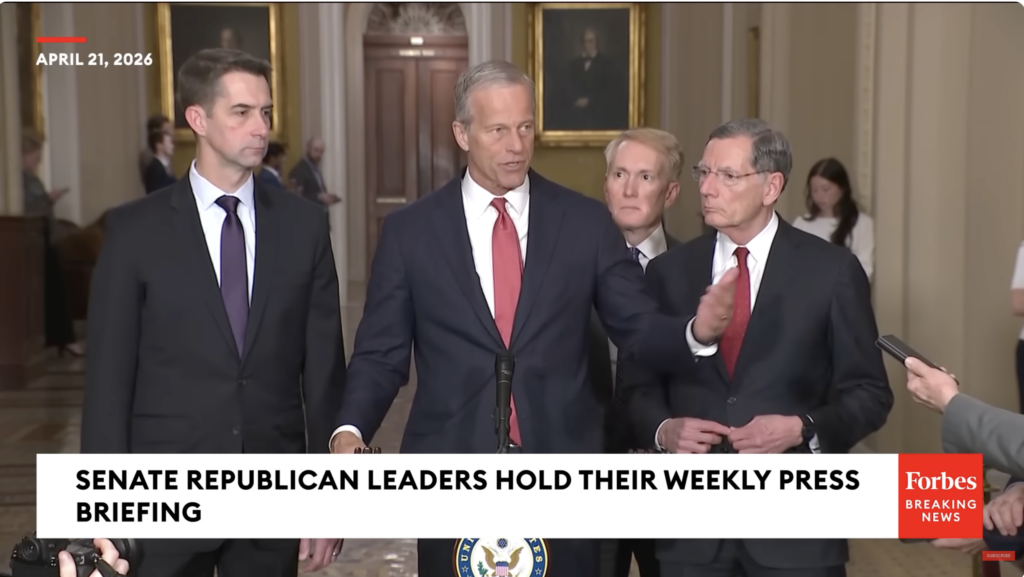
Senate Republicans are currently facing significant criticism for their handling of immigration funding and accountability measures related to alleged government abuses. The party’s struggle to unify on these issues has drawn sharp rebuke from conservative commentators and lawmakers who argue that the GOP's inaction is undermining efforts to hold the Biden administration accountable. Central to the debate is the funding for Immigration and Customs Enforcement (ICE) and the Department of Justice’s controversial anti-weaponization fund, which was established during the Trump administration to address claims of political targeting.
The background of this conflict stems from ongoing tensions within the Republican caucus, where divisions over immigration policy and government accountability have stalled legislative progress. Senate Republicans have been unable to advance a reconciliation bill aimed at securing $70 billion for border security and ICE operations. This legislative gridlock has allowed Democrats to maintain leverage in negotiations and complicate the broader political landscape as the 2024 elections approach. Critics contend that the GOP’s failure to act effectively is inadvertently aiding Democrats in efforts to dismantle accountability measures for what some perceive as politically motivated government actions.
Among the most vocal critics is Mollie Hemingway, editor-in-chief of The Federalist, who expressed frustration with the Senate GOP’s approach. Hemingway argued that the party’s inaction appears to be enabling media and Democratic efforts to weaken accountability for what she describes as Democrat lawfare and censorship. This sentiment reflects a growing concern among conservative voters and commentators that Republican leaders are not adequately addressing the issue of government overreach and political weaponization. Senate Majority Leader John Thune has faced particular scrutiny for his leadership during this period of legislative impasse.
Thune’s decision to leave Washington for a nine-day Memorial Day weekend without resolving the immigration funding bill has been cited by critics as a sign of a lack of urgency. His office did not respond to questions about whether he believes accountability for victims of alleged government weaponization is necessary. This absence of decisive action has fueled frustration among Republican senators, some of whom have expressed doubts about the immigration bill’s viability. Reports indicate that enough Republican senators remain unconvinced by the current proposals to block progress, citing unresolved questions that could hinder the bill’s advancement without clear resolutions.
What's at stake
Adding to the controversy is the Department of Justice’s recent compliance with a court order temporarily freezing the Trump administration’s $1.776 billion anti-weaponization fund. This fund was intended to provide restitution to individuals who claim they were unfairly targeted by government actions based on their political beliefs. Conservative lawmakers have criticized the DOJ’s move, arguing that the fund is essential for ensuring accountability and justice for those they view as victims of political persecution. However, some Senate Republicans have expressed concerns about the fund’s implications, particularly regarding potential payouts to individuals involved in the January 6 Capitol riots.
Senator Lisa Murkowski of Alaska voiced skepticism about the fund’s future, stating that she would be satisfied if it were completely pulled but noted uncertainty about whether that is actually happening. This highlights the broader uncertainty within the GOP about how to handle the fund and its impact on immigration legislation. Critics like Kyle Brosnan, general counsel for the Oversight Project, have accused Senate Republicans of hypocrisy, pointing out that the same Senate majority that secured legal protections for themselves is now opposing the anti-weaponization fund. Brosnan emphasized that if victims of weaponization are not compensated, it sets a troubling precedent for accountability.
The ongoing debate over immigration funding and accountability measures raises significant questions about the Republican Party’s direction and priorities. As internal divisions persist, the party’s ability to present a cohesive strategy on these critical issues remains uncertain. This lack of unity risks alienating conservative voters who expect their elected officials to address government overreach and political weaponization decisively. The stakes are high, not only for immigration policy but also for the broader political landscape as the 2024 elections draw nearer.
Looking ahead, the Senate GOP faces a critical decision point. The party must either find common ground to advance immigration funding and accountability legislation or risk continued stalemate that could weaken its standing with conservative constituents. Observers will be watching closely to see if Senate leaders can reconcile internal differences and respond to mounting pressure from their base. The next few months will be pivotal in determining whether the GOP can effectively address these contentious issues or if the legislative impasse will persist through the election cycle.
Why it matters
Senate Republicans face criticism for their handling of immigration funding and government accountability measures. Internal GOP divisions have stalled progress on key immigration and anti-weaponization funding legislation. Democrats benefit politically from the Republican stalemate, complicating the legislative environment.
Conservative voices argue GOP inaction undermines efforts to hold the Biden administration accountable. The DOJ’s freeze on the anti-weaponization fund has intensified GOP frustrations and intra-party debate. The outcome of this debate has significant implications for immigration policy and the 2024 elections.
Failure to act risks alienating conservative voters who prioritize government accountability.
Key facts & context
Senate Republicans have not advanced a reconciliation bill to secure $70 billion for border security and ICE. The anti-weaponization fund was established during the Trump administration with $1.776 billion allocated. The Department of Justice recently complied with a court order temporarily freezing this fund.
Senate Majority Leader John Thune faced criticism for leaving Washington during a critical legislative period. Some Republican senators have expressed doubts about the immigration bill’s viability due to unresolved issues. Conservative commentator Mollie Hemingway publicly criticized the GOP for failing to address accountability.
Senator Lisa Murkowski expressed skepticism about the future of the anti-weaponization fund. Kyle Brosnan of the Oversight Project accused Senate Republicans of hypocrisy regarding legal protections. The debate over immigration funding and accountability is occurring amid the approaching 2024 elections.
The GOP’s internal divisions reflect broader challenges in balancing immigration policy and government oversight.
Timeline & key developments
2026-06-02: Senate GOP Faces Criticism Over Immigration Funding and Accountability Measures. Additional reporting on this topic is available in our broader archive and will continue to shape this timeline as new developments emerge.
Primary sources
Further reading & references
- (Additional background links will appear here as we cover this topic.)
Related posts
- Republican Lawmakers Advance DIGNIDAD Act to Grant Legal Status Amid GOP Debate
- Senate Republicans Block $1.776 Billion Restitution Fund for Victims of Government Overreach
- House Republicans Reject Senate Deal on DHS Funding Over Immigration Enforcement Dispute
- Indiana Senate Rejects Redistricting Plan Amid Internal GOP Divisions
- Senate Hearing Highlights Divisions Over Mail-Order Abortion Pills
- U.S. Athletes Face Backlash for Criticizing Country at Winter Olympics