TLT Explains
Congress Approves Three-Year Extension of Temporary Protected Status for Haitians Amid Debate
What's happening
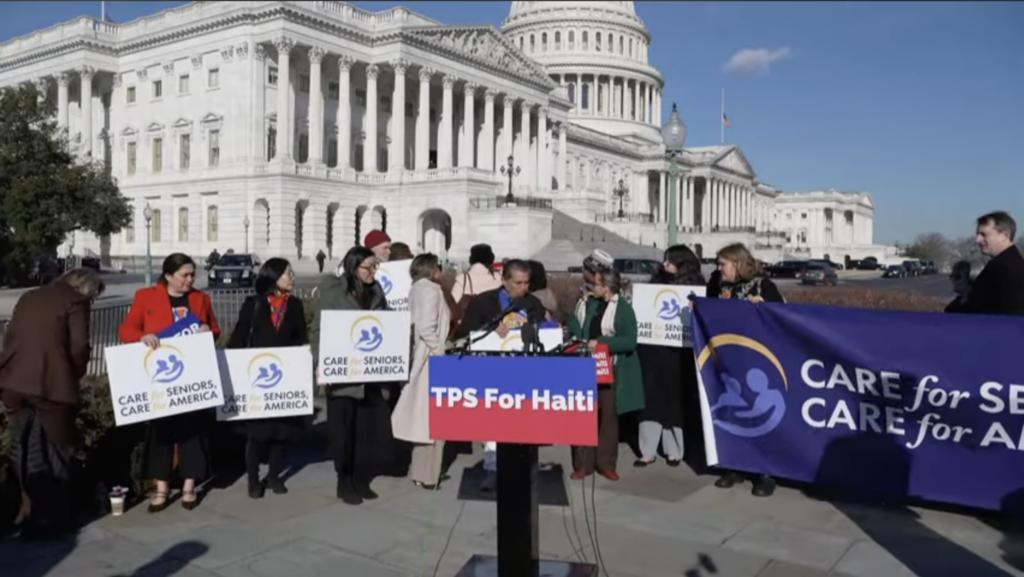
On Thursday, Congress voted to extend Temporary Protected Status (TPS) for Haitians by an additional three years, a move that has sparked considerable debate over the interpretation of the term "temporary" in immigration policy. TPS is designed to provide short-term protection for individuals from countries experiencing crises, allowing them to live and work legally in the United States while conditions in their home countries improve. However, critics argue that repeated extensions of TPS undermine its original intent and effectively transform it into a long-term immigration solution.
The TPS designation for Haitians was first granted in 2010 following a devastating earthquake that caused widespread destruction and loss of life. Since then, the status has been renewed multiple times due to ongoing political instability, violence, and humanitarian challenges in Haiti. These extensions have allowed thousands of Haitians to remain in the U.S. legally, but they have also raised questions about the program’s role and the broader implications of prolonged temporary protections.
The Biden administration continues to face scrutiny over its immigration policies, particularly in relation to the surge of unauthorized immigrants at the southern border. Recent reports indicate that over 15,000 Haitians crossed the border illegally during a surge, with many discarding identification and paperwork from other countries to make asylum claims upon arrival. Former Homeland Security Secretary Alejandro Mayorkas acknowledged that more than 12,000 of these individuals were released into the U.S., intensifying concerns about border security and immigration enforcement.
TPS was originally intended as a temporary measure, allowing individuals from designated countries to stay in the U.S. when returning home would pose a danger due to natural disasters, armed conflict, or other extraordinary conditions. However, the law does not specify how long a TPS designation should last once conditions improve, leading to indefinite extensions in some cases. This ambiguity has fueled criticism that the program is being exploited, turning what was meant to be a short-term solution into a long-term status for many.
What's at stake
Political reactions to the extension have been mixed. A bipartisan group of lawmakers supported the three-year renewal, with ten Republicans joining Democrats in the vote. Nonetheless, some critics argue that the repeated extensions reflect a broader trend of misusing the term "temporary" in legislation, creating policies that are difficult to revoke once established. Former deputy assistant to President Donald Trump, Theo Wold, highlighted this concern on social media, noting that TPS designations for countries like Somalia and Haiti were initially meant to last 18 months but have continued for decades.
Supporters of the extension emphasize the humanitarian need to protect vulnerable populations who cannot safely return to their home countries. They argue that ongoing instability in Haiti justifies continued TPS protections. Meanwhile, opponents contend that such extensions undermine the integrity of immigration law and contribute to perceptions of lawlessness at the border, complicating efforts to reform immigration policy in the United States.
The implications of extending TPS for Haitians go beyond immigration policy alone. Critics warn that the normalization of temporary measures can lead to significant demographic and political shifts, particularly in states where redistricting and electoral strategies are contentious. Some fear that labeling policies as "temporary" makes them easier to implement but harder to reverse, potentially impacting political representation and legislative processes.
As the debate over TPS continues, the Biden administration faces ongoing challenges balancing humanitarian concerns with border security and immigration enforcement. The extension of TPS for Haitians underscores the complexities of immigration reform and the difficulties in defining and managing temporary protections within U.S. law. Both supporters and critics remain vocal, reflecting the broader tensions surrounding immigration policy today.
Looking ahead, the future of TPS for Haitians will depend on developments in Haiti’s political and humanitarian situation, as well as shifts in U.S. immigration policy. Congress and the administration will likely revisit the issue as the new three-year extension approaches its end, with potential debates over whether to renew, terminate, or modify the program. Observers will be watching closely for how policymakers address the balance between providing humanitarian relief and maintaining the temporary nature of TPS.
Why it matters
The extension of TPS for Haitians provides continued legal protection for thousands amid ongoing instability in Haiti. Critics argue that repeated extensions blur the meaning of "temporary," potentially creating permanent immigration statuses. The decision reflects broader tensions in U.S. immigration policy between humanitarian concerns and border enforcement.
Ongoing TPS extensions may influence demographic and political dynamics, especially in states with contentious redistricting. The debate highlights challenges in defining and managing temporary immigration protections within U.S. law.
Key facts & context
Congress voted on Thursday to extend Temporary Protected Status for Haitians by three years. TPS was first granted to Haitians in 2010 following a devastating earthquake. The TPS program allows individuals from designated countries to live and work legally in the U.S. temporarily.
The law does not specify how long a TPS designation should last once conditions improve. Over 15,000 Haitians crossed the U.S. southern border illegally during a recent surge. More than 12,000 of these individuals were released into the U.S., according to former Homeland Security Secretary Alejandro Mayorkas.
A bipartisan group of lawmakers, including ten Republicans, supported the TPS extension. Critics argue that TPS extensions have turned a temporary measure into a long-term solution. Former deputy assistant to President Trump Theo Wold noted that TPS designations for Somalia and Haiti were originally meant to last 18 months but have continued for years.
The extension has reignited debate over the interpretation of "temporary" in immigration policy. TPS extensions have implications beyond immigration, affecting political representation and legislative integrity.
Timeline & key developments
2026-04-17: Congress Extends Temporary Protected Status for Haitians Amid Criticism. Additional reporting on this topic is available in our broader archive and will continue to shape this timeline as new developments emerge.
Primary sources
Further reading & references
- (Additional background links will appear here as we cover this topic.)
Related posts
- Supreme Court Reviews Legality of Ending Temporary Protected Status for Syrian and Haitian Migrants
- Rep. Nancy Mace Proposes Resolution to Bar Foreign-Born Citizens From Congress and Federal Posts
- Democrats Opt For Government Shutdown Over Health Care Restrictions For Noncitizens
- Washington Post Article Draws Criticism for Linking Justice Barrett's Family to Immigration Case
- 9th Circuit Allows DHS to End Temporary Protected Status for 60,000 Foreign Nationals