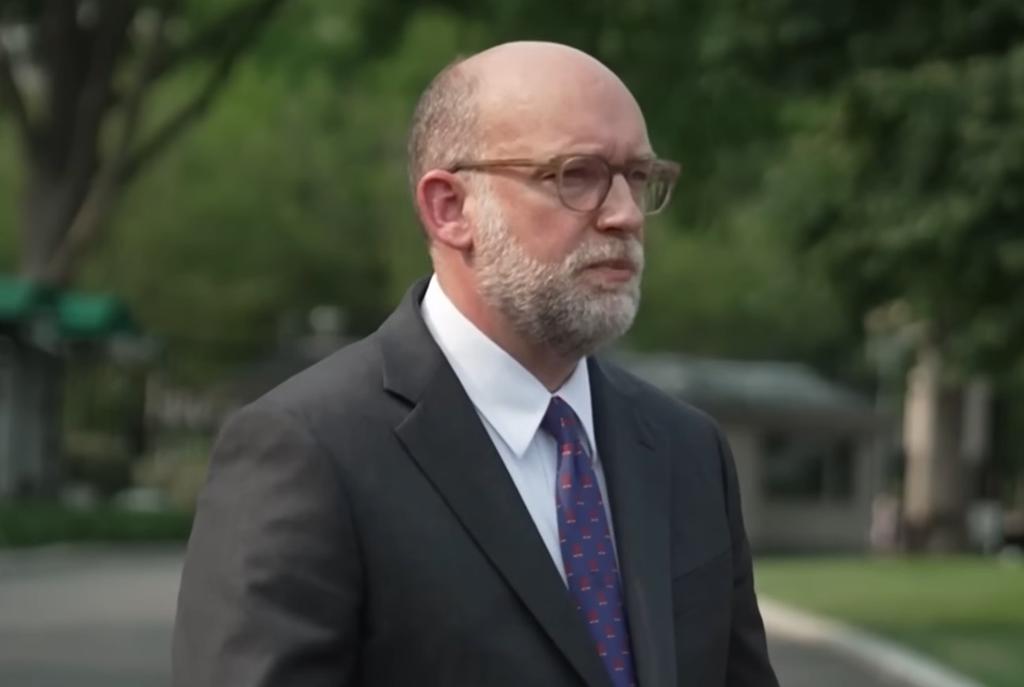
The Office of Management and Budget (OMB) has reaffirmed its decision to maintain a security detail for Director Russell Vought, following an assassination attempt earlier this year. This decision has sparked significant criticism from Rep. Raja Krishnamoorthi, a Democrat from Illinois, who has objected to the use of USAID funds for Vought's protection. The controversy centers on the allocation of taxpayer dollars for Vought's security in light of ongoing threats against him, which critics argue undermines the mission of the U.S. Agency for International Development (USAID).
OMB Defends Security Detail for Vought Amid Criticism from Democrats
Krishnamoorthi's letter to the OMB described the funding as a misuse of congressionally appropriated funds, raising serious concerns about the integrity and operational focus of USAID. He argued that the agency's primary goal is to provide humanitarian aid and development assistance, and diverting funds for Vought's security could detract from these essential objectives.
Background and Reactions
Vought, who previously served as the acting administrator of USAID, was the target of an assassination attempt outside his home in Arlington, Virginia. This incident occurred after he had received multiple credible death threats. The would-be assailant reportedly cited left-wing rhetoric, claiming that officials from the Trump administration, including Vought, were part of a “fascist takeover” of the government. This context has heightened the urgency surrounding the need for Vought's protection.
In response to Krishnamoorthi's concerns, OMB General Counsel Mark Paoletta emphasized the heightened threat level against Vought. He attributed this danger to a broader campaign by some Democrats to vilify officials from the Trump administration. In his letter to Krishnamoorthi, Paoletta stated, “Your letter is the definition of chutzpah,” arguing that the rhetoric used by some Democrats incites violence against conservative figures. He pointed to statements from prominent Democrats, including Senator Chuck Schumer, who labeled Vought as “the most dangerous nominee” put forward by former President Trump.
Krishnamoorthi expressed particular concern over the $15 million allocated for Vought's security detail through the U.S. Marshals Service. He stated that this funding diverts essential resources from USAID’s humanitarian mission. While he acknowledged that protecting government officials is a legitimate priority, he did not specifically address the nature of the threats Vought faces. “Redirecting funds away from these objectives to pay for domestic security operations deviates sharply from Congress’s intent,” Krishnamoorthi stated, highlighting the tension between security needs and agency missions.
Despite the ongoing criticism, Paoletta defended the necessity of Vought's security detail, citing the ongoing threats linked to his role at USAID. “Director Vought continues to serve as a Senior Advisor at USAID and the security threat persists,” he noted. Paoletta argued that it is appropriate for USAID to contribute to Vought's security funding, especially given the rise in threats due to his position and the political climate surrounding it.
This debate highlights a broader tension between the security needs of public officials and the allocation of federal funds. Critics of the funding argue that it detracts from USAID's core mission of providing humanitarian aid and development assistance, which is vital for many communities both domestically and internationally. However, supporters of the funding contend that the threats against Vought are serious and warrant a robust security response to ensure his safety.
In his letter, Paoletta concluded that the threats against Vought are part of a larger effort to intimidate officials who hold conservative views. “These threats are designed to intimidate President Trump’s officials and Supreme Court Justices,” he stated, emphasizing that Vought will not yield to such pressures. This assertion underscores the ongoing political tensions and the challenges faced by officials in the current environment.
As the situation unfolds, it remains unclear how Congress will respond to the ongoing debate over security funding for government officials amid rising political tensions. The OMB's stance indicates a commitment to ensuring the safety of its officials, while critics continue to voice concerns over the implications for taxpayer dollars and the mission of USAID. The outcome of this debate may have lasting effects on how security for government officials is funded and prioritized in the future.