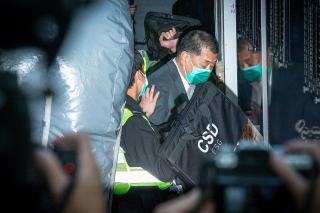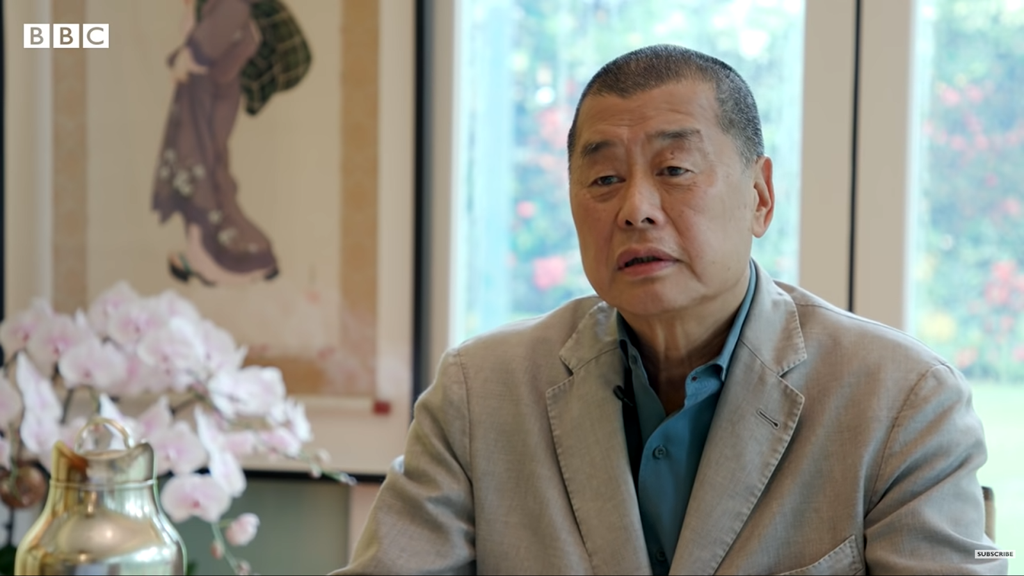
Pro-democracy activist and media tycoon Jimmy Lai was convicted on Monday by a Hong Kong court on charges of collusion with foreign powers and sedition. The case, which has drawn international attention, is seen as part of a broader crackdown on dissent in the semi-autonomous region under the Chinese Communist Party (CCP). Lai faces a potential life sentence, with sentencing scheduled for January 12, 2026.
The conviction raises significant concerns about press freedom and political dissent in Hong Kong, where critics argue that the national security law is being used to stifle opposition. Lai, 78, has been a vocal advocate for democracy and freedom of the press, and his trial has been viewed as emblematic of the CCP's efforts to suppress dissenting voices.
Lai was charged under Hong Kong's national security law, enacted in 2020, which has been criticized for its broad definitions and potential to criminalize legitimate political expression. According to CNBC, the court stated that Lai “harbored his resentment and hatred of the PRC [People’s Republic of China] for many of his adult years.” The court also claimed that he sought foreign intervention to impose sanctions against Hong Kong and China. While Lai acknowledged calling for sanctions in the past, he argued that he ceased doing so after the law was enacted.
Background on Jimmy Lai
Lai is the founder of the now-defunct Apple Daily, a pro-democracy newspaper that was a significant platform for dissent against the Chinese government. His publications were instrumental in mobilizing public support for pro-democracy protests in Hong Kong from 2003 to 2019. Federalist Senior Contributor Helen Raleigh noted that Lai's media outlets played a crucial role in fostering political engagement among Hong Kong residents.
The CCP has targeted Lai not only for his journalism but also for his outspoken criticism of the government. Supporters argue that his conviction is a politically motivated attempt to silence one of the most prominent voices advocating for democracy in Hong Kong. They contend that the charges against him are unfounded and reflect a broader strategy to eliminate dissent.
International Reactions
The international community has condemned Lai's conviction, viewing it as a significant blow to press freedom and human rights in Hong Kong. Human rights organizations and foreign governments have called for his immediate release, arguing that the charges are politically motivated. However, the Hong Kong government has defended the legal proceedings, asserting that they are necessary to maintain national security.
Despite the backlash, the Hong Kong government has not provided a detailed response to the criticism surrounding Lai's trial. Officials have maintained that the national security law is essential for protecting the region from foreign interference and ensuring stability.
Implications for Press Freedom
Lai's case underscores the deteriorating state of press freedom in Hong Kong, where many journalists and activists have faced similar charges under the national security law. Critics argue that the law has created a chilling effect, leading to self-censorship among media outlets and a decline in independent journalism.
The implications of Lai's conviction extend beyond Hong Kong, raising concerns about the future of press freedom in other regions under authoritarian regimes. Supporters of Lai argue that his courage in standing up to the CCP serves as a reminder of the importance of a free press in holding governments accountable.
As the sentencing date approaches, the international community continues to monitor the situation closely, with many advocating for greater protections for journalists and activists in Hong Kong. The outcome of Lai's case may set a precedent for how dissent is treated in the region moving forward, highlighting the ongoing struggle for democracy and human rights in Hong Kong.