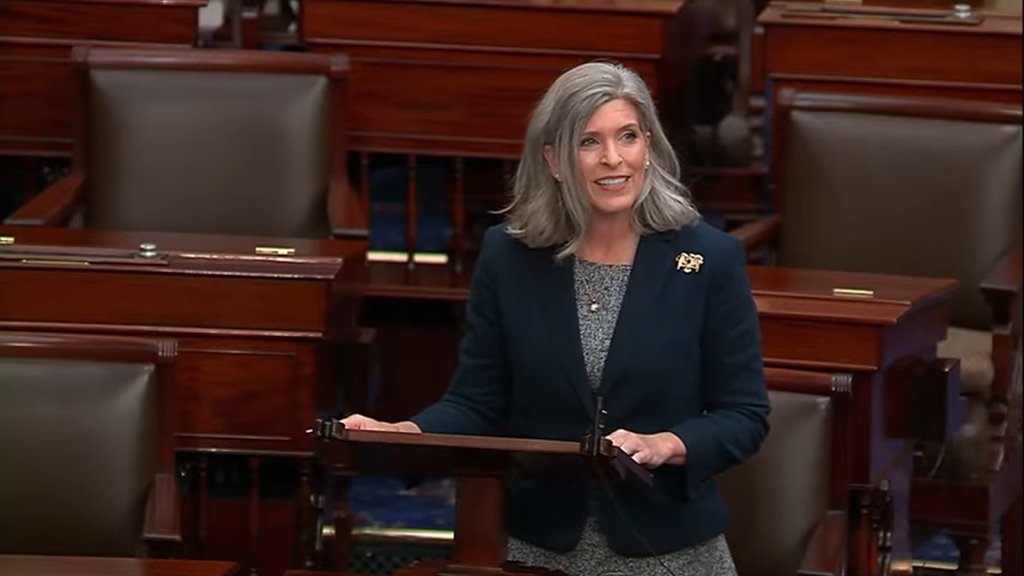
Sen. Joni Ernst, R-Iowa, introduced legislation on Thursday aimed at closing a loophole in the Supplemental Nutrition Assistance Program (SNAP) that has allowed users to spend significant amounts of taxpayer money at fast-food restaurants. Ernst criticized the current system, stating, "Fast food franchises are feasting on the taxpayers’ dime. This McFlurry of abuse cannot be allowed to continue as America’s national debt soars past $38 trillion. It’s time to think outside the bun and restore the SNAP program to its original mission by delivering healthy, instead of happy, meals."
The proposed legislation, known as the McSCUSE Me Act, seeks to reform SNAP's Restaurant Meals Program (RMP), which permits certain SNAP clients to purchase prepared meals at restaurants. According to the U.S. Department of Agriculture (USDA), the program is designed for individuals who may not have access to kitchens or permanent housing to prepare meals.
Currently, nine states participate in the RMP: Arizona, California, Illinois, Maryland, Massachusetts, Michigan, New York, Rhode Island, and Virginia. Ernst's office indicated that the RMP was established in 1977 to assist homeless individuals, with eligibility later expanded to include the elderly and disabled.
However, Ernst's office noted that the program has seen substantial growth in recent years, particularly in California, where state officials and the Biden administration have authorized over 5,800 restaurants to accept SNAP benefits. Many of these establishments are well-known fast-food chains, including McDonald’s and Pizza Hut.
Data provided to Ernst by the Trump-era USDA revealed that between June 2023 and May 2025, approximately $524 million in SNAP benefits were spent at fast-food restaurants, with California accounting for the majority at over $475 million. Arizona followed with $41.4 million, while New York, Michigan, and several other states reported significantly lower amounts.
The McSCUSE Me Act aims to limit the types of food vendors eligible for participation in the RMP. Under the proposed bill, a retail food store must not be primarily engaged in selling quick-service or fast-food items. Additionally, eligible establishments must comply with all state and local food safety and health standards applicable to grocery stores or supermarkets.
Furthermore, the legislation stipulates that spouses of individuals eligible for SNAP would not be allowed to participate in the program.
Ernst's initiative reflects ongoing concerns about the use of taxpayer funds and the integrity of the SNAP program. As discussions about food assistance continue, the McSCUSE Me Act seeks to ensure that benefits are directed toward healthier food options rather than fast-food establishments.