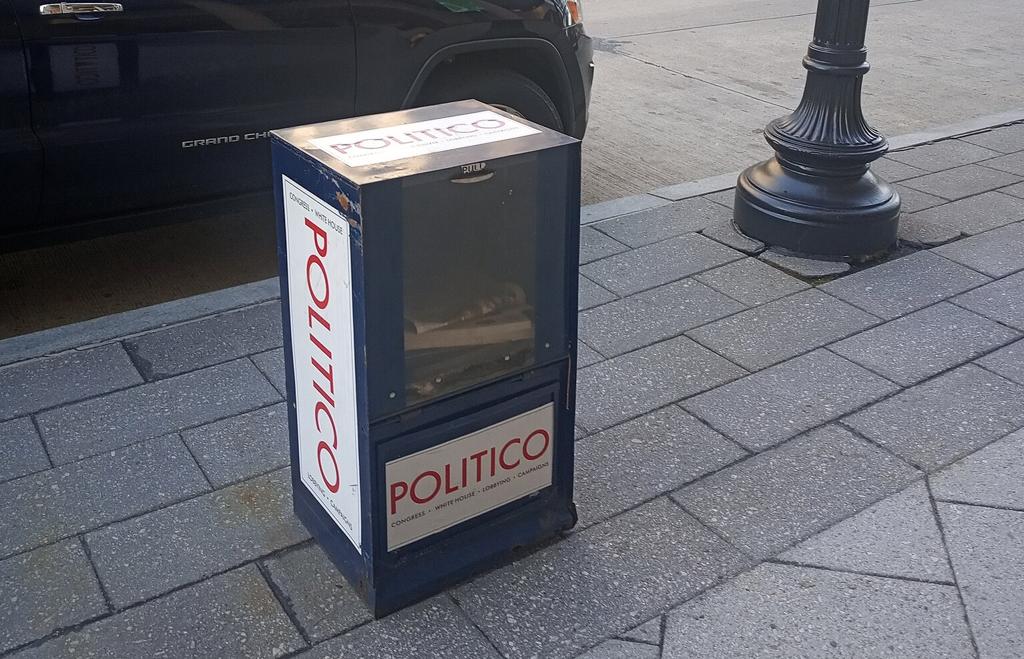
A recent analysis of Politico's reporting practices suggests a troubling trend in Washington journalism, where superficial understanding of policy may lead to misinformation. The analogy of 'The Emperor’s New Clothes' is invoked to illustrate how many reporters appear to conceal their lack of knowledge rather than admit it. This phenomenon contributes to public cynicism regarding corporate media.
A case in point is a Politico article that attempted to fact-check a social media post by former President Donald Trump. Trump claimed that Democrats were seeking over $1 trillion in new spending for healthcare for illegal immigrants and taxpayer-funded transgender surgeries for minors. The article argued that a provision in a House-approved bill preventing Medicaid from covering transgender procedures was removed in the Senate, thus rendering Trump's claims inaccurate.
However, critics argue that Politico overlooked a significant detail: the extension of Obamacare subsidies included in the Democrats' bill, which fund transgender procedures in several states. This oversight raises questions about the accuracy of Politico's fact-checking process. An email sent to the reporters involved, highlighting this point, went unanswered, suggesting a lack of accountability in their reporting.
Furthermore, a subsequent article by the same reporters acknowledged the existence of state requirements for insurance plans to cover gender-reassignment surgeries but did not address the initial inaccuracies. This lack of transparency in correcting errors undermines the credibility of the publication and raises concerns about its ability to hold the government accountable.
The issue is compounded by the business model of Politico and similar outlets, which often prioritizes content production over thorough research. An example cited involves a report on Joe Biden's historical involvement in prescription drug legislation, where the reporter may have relied on superficial summaries rather than conducting in-depth research. This practice reflects a broader trend in journalism where the quality of reporting is sacrificed for speed and volume.
Critics argue that such practices not only misinform the public but also erode trust in the media. The notion that journalists should be held accountable for their reporting is emphasized, as the failure to acknowledge mistakes can lead to a cycle of misinformation.
In conclusion, the analysis of Politico's reporting practices highlights a concerning trend in journalism where superficial knowledge and a lack of accountability may contribute to public distrust. As media outlets strive to maintain credibility, it is essential for them to prioritize accuracy and transparency in their reporting to regain the trust of their audience.