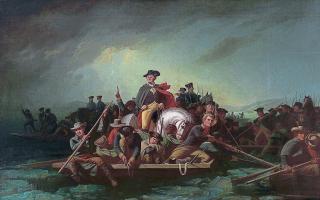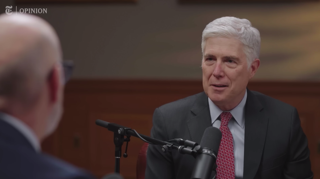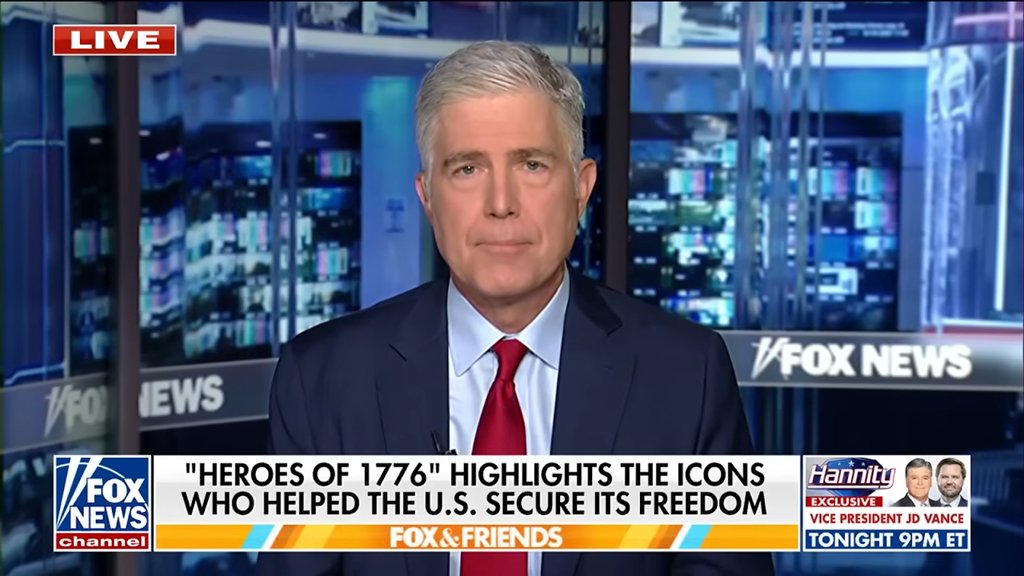
Supreme Court Justice Neil Gorsuch has emphasized the critical role of civic education in America, warning that neglecting shared history and responsibilities poses a significant threat to the nation. During an appearance on Fox News’ Fox & Friends, Gorsuch discussed his new children’s book, The Heroes of 1776, which aims to educate young readers about the Founding Fathers and lesser-known patriots from the Revolutionary War era.
In the interview, host Lawrence Jones prompted Gorsuch to elaborate on a quote from his book regarding the Constitution establishing the first modern republic where people govern themselves. Gorsuch referenced the Declaration of Independence, highlighting three fundamental ideas: the equality of all individuals, the unalienable rights granted by God rather than government, and the right of the people to self-govern.
"Those three ideas really shook old Europe and were never before tried in history," Gorsuch stated. He noted that while these concepts are often taken for granted today, they required significant courage from individuals in 1776 and continue to demand the same commitment from contemporary Americans. He cited Thomas Jefferson's warning that an ignorant populace cannot remain free for long, underscoring the necessity of understanding history to preserve it.
Jones raised concerns about the decline in teaching foundational stories in schools, asking Gorsuch if this trend has negatively impacted society. Gorsuch affirmed that the lack of civic education is a shared concern among his colleagues on the Supreme Court. He pointed to alarming statistics indicating a decrease in civic knowledge across the United States, asserting that this ignorance represents an existential threat to the country's future.
"If you ask me what the greatest danger America faces today, it’s itself," Gorsuch remarked. He stressed the importance of dialogue and shared history, suggesting that recognizing commonalities can help bridge divides. Gorsuch's comments reflect a broader concern about the state of civic education and its implications for democracy.
This interview is not the first instance of Gorsuch addressing the need for civic education. In his 2019 book, A Republic If You Can Keep It, he argued that a functioning government relies on an engaged citizenry united by common ideals. He emphasized that understanding the structure and promises of government is essential for citizens to govern themselves peacefully and respectfully.
Gorsuch's remarks resonate with ongoing discussions about the importance of civic education in fostering an informed and active citizenry. As debates continue over educational curricula and the role of history in schools, Gorsuch's perspective underscores the potential consequences of neglecting civic knowledge in shaping the future of American democracy.