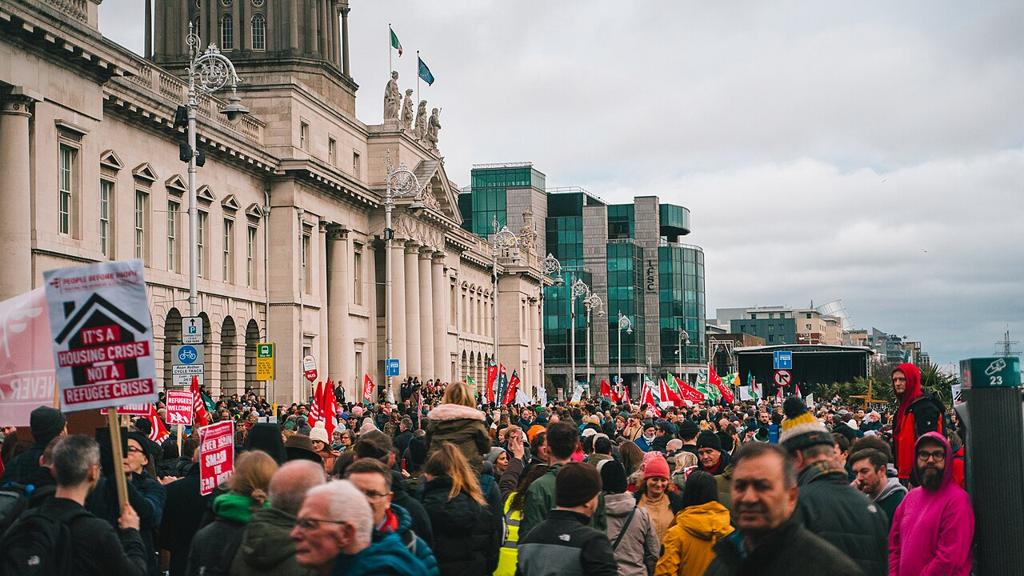
A ten-year-old girl was allegedly raped near a migrant-housing center on the outskirts of Dublin last week, prompting widespread outrage and protests in Ireland. The suspect, reportedly from North Africa, had been in Ireland for six years and was subject to unenforced deportation orders. He has been provided with a state-funded Arabic interpreter for his court proceedings. A judge has ordered a report on the defendant's fitness to stand trial, while the victim was identified as a ward of the state. Authorities have not disclosed how she was near the migrant facility at the time of the incident.
Explainer Understanding Immigration Enforcement: Policies and Controversies
Following the news, protests erupted near the accommodation facility, leading to at least sixteen arrests and incidents of violence, including a police van being set on fire. Critics have noted that government officials have largely condemned the protests while remaining silent on the alleged crime. The state child-care agency has also faced backlash for its comments regarding the victim.
Earlier this year, the Irish government purchased the Citywest Hotel for over €148 million to house migrants, which has become a focal point of tension in the community. Local residents had previously expressed concerns about the potential for violence, with social media accounts like "Stop Citywest Hotel" highlighting issues related to migrant behavior in the area.
The incident has reignited debates about immigration policy in Ireland, where 22 percent of the population is foreign-born, ranking the country fourth in the EU. Critics argue that the influx of migrants has led to increased crime and social unrest. "The pretence that we can house any more asylum applicants is, in any case, ridiculous," said Irish journalist Niamh Uí Bhriain, emphasizing the strain on resources and public safety.
The alleged rape follows a series of violent incidents involving migrants in Dublin, including the murder of a young Irish woman by a Slovakian Roma man and a stabbing attack by a homeless Algerian migrant outside a primary school. These events have fueled public frustration and calls for stricter immigration controls.
Despite assurances from government officials that the economy relies on migrants, many argue that the costs associated with housing and supporting them are unsustainable. The Irish state has reportedly spent over €6 billion on NGOs and migrant services in recent years, raising questions about the effectiveness of current policies.
Political analysts suggest that the current political landscape in Ireland, dominated by two major parties, has stifled meaningful debate on immigration and public safety. "Rarely has the political consensus seemed more oppressive, or detached from the wishes and desires of the public," noted Maria Steen, a candidate in the recent presidential election.
As protests continue, many Irish citizens are calling for a reassessment of immigration policies and a return to a focus on public safety and community well-being.