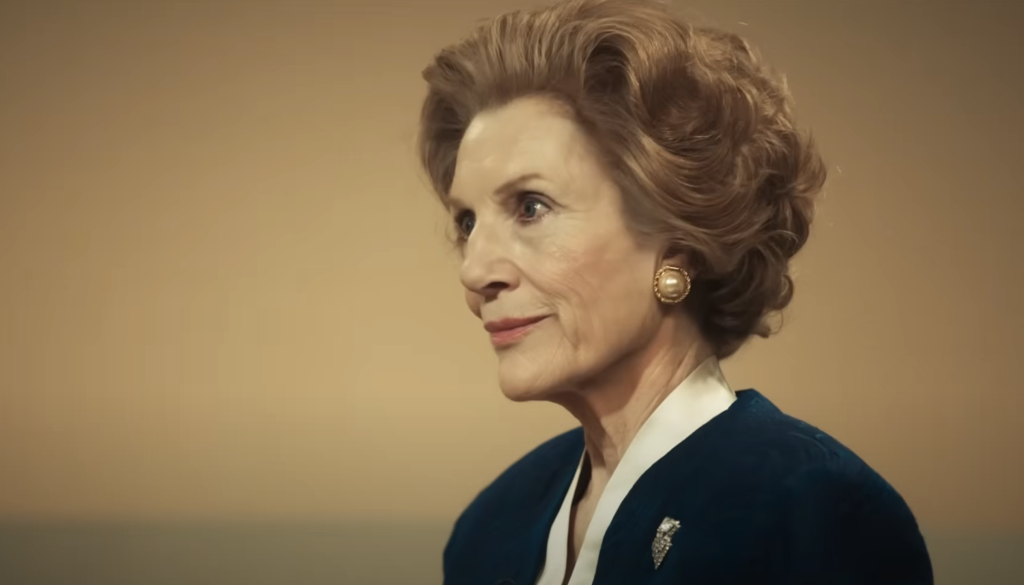
In recent years, the media landscape has faced significant scrutiny, with criticisms regarding corruption and bias becoming increasingly prevalent. The docudrama 'Brian and Maggie,' which aired on ITV in the UK and was later imported to the U.S. by PBS, explores the complex relationship between the press and politicians through the lens of Margaret Thatcher's final television interview as prime minister.
Explainer Christianity and Sports: Navigating Faith in Public Life
The interview, conducted by broadcaster Brian Walden, took place shortly after the resignation of Thatcher's chancellor of the Exchequer, Nigel Lawson. This pivotal moment raised questions about Thatcher's leadership and economic policies, particularly their ongoing conflict over exchange rates. Lawson's departure highlighted the internal tensions within Thatcher's government, as well as the challenges she faced from critics within her own party.
Walden, who had previously served as a Labour MP before transitioning to journalism, was regarded by Thatcher as her favorite interviewer. This relationship adds a layer of complexity to the interview, as Walden had previously written speeches for Thatcher, raising ethical questions about his impartiality as a journalist.
The docudrama covers a wide range of topics, including Thatcher's rise to power and the media landscape of the 1970s and 1980s. However, it primarily focuses on the interview itself, which is depicted in the second episode. In a teaser clip, a fictionalized version of Thatcher refers to the interview as a “betrayal.” (Www.fcc — fcc.gov) The actual interview, which lasts 45 minutes, reveals a defensive Thatcher struggling to address Walden's probing questions.
During the interview, Thatcher repeatedly deflected questions about her economic adviser, who had contributed to the friction with Lawson. Despite her insistence that she did not want Lawson to resign, she later acknowledged in her memoir that she had faced an ultimatum from him regarding her adviser. This admission underscores the challenges she faced in managing her public image and the realities of her leadership style.
While Walden's approach was somewhat sympathetic, he did press Thatcher on her decisions, reflecting a more traditional style of political interviewing. The docudrama contrasts this with the current media landscape, where politicians often evade tough questions. The opening scenes feature footage of Boris Johnson avoiding an interview, illustrating how the dynamics of political communication have shifted in recent years.
'Brian and Maggie' ultimately emphasizes the importance of rigorous journalism in revealing truths that politicians may prefer to keep hidden. The docudrama concludes with the reminder that effective interviews can still uncover significant insights, even in an era where media fragmentation allows for greater evasion of accountability.
The final episode of 'Brian and Maggie' airs on Sunday, October 12, on PBS stations and is available on the PBS app.