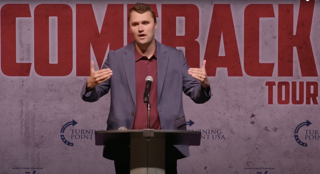
Erika Kirk, the widow of Turning Point USA founder Charlie Kirk, delivered a poignant message of forgiveness during her husband's memorial service held at State Farm Stadium in Glendale, Arizona. As she prepared to lay her husband to rest, she publicly forgave the 22-year-old man accused of his assassination, emphasizing the importance of love over hate.
Explainer Christianity and Sports: Navigating Faith in Public Life
"My husband, Charlie, he wanted to save young men, just like the one who took his life," (Newsweek) she said, expressing her belief that forgiveness is a reflection of Christ's teachings. "The answer to hate is not hate. The answer we know from the Gospel is love and always love," she added, highlighting her commitment to her faith amid personal tragedy.
In the wake of Charlie Kirk's death on September 10, Erika's message stood in stark contrast to some reactions on social media. Following the assassination, a post on X (formerly Twitter) by a user identified as Brandy Bryant garnered significant attention, with thousands of likes and reposts. The post was seen as an example of the divisive rhetoric that has emerged in the political landscape.
Erika Kirk's act of forgiveness has been viewed as a courageous response to the hatred that has permeated discussions surrounding her husband's murder. Reports indicate that the alleged killer is associated with far-left ideology, further intensifying the political divide.
In a broader context, Erika's message has been interpreted as a call to reject the cycle of hatred that has characterized recent political discourse. She urged the public to embrace love, particularly towards those who may oppose them, stating, "Love for our enemies and love for those who persecute us." (Newsweek)
The political climate surrounding Charlie Kirk's death has been contentious. Following the incident, Rep. Alexandria Ocasio-Cortez criticized Kirk's beliefs and rhetoric, stating they were "ignorant" (Newsweek) and "uneducated." Her remarks came as part of a larger debate in Congress, where a resolution condemning political violence was met with opposition from some Democrats, including Ocasio-Cortez and members of the so-called "Squad."
Erika Kirk's public stance has resonated with many who view her message as a beacon of hope in a time of division. She articulated a vision for America that emphasizes redemption over perdition, urging people to choose love in the face of adversity.
As the nation grapples with differing ideologies, Erika Kirk's testimony serves as a reminder of the potential for compassion and understanding in a deeply divided society. Her call for love and forgiveness stands in contrast to the vitriol that often characterizes political discussions today.
In reflecting on the two roads before America, Erika Kirk has made her position clear: "The answer to hate is not hate. The answer we know from the Gospel is love and always love." (Newsweek)