TLT Explains
FBI Surveillance of Trump Allies Sparks Controversy Amid Quiet from Democratic Lawmakers
What's happening
The FBI's recent surveillance activities targeting allies of former President Donald Trump have ignited a significant political controversy. Among those surveilled were Kash Patel, the current FBI Director, and Susie Wiles, the White House Chief of Staff. Reports have emerged detailing the agency's actions during the Biden administration, including subpoenas for phone records and recorded communications. These revelations have prompted criticism from various quarters, with some accusing the FBI of politically motivated spying. Meanwhile, Democratic lawmakers have largely remained silent or cautious in their public responses to the issue.
The controversy centers on allegations that the FBI conducted unauthorized surveillance on political opponents, raising concerns about potential abuses of federal investigative powers. This surveillance reportedly occurred while some targets were private citizens in 2022 and 2023. Two anonymous FBI officials disclosed that a phone call between Wiles and her attorney was recorded in 2023. Patel condemned the operation as "outrageous and deeply alarming," suggesting that previous FBI leadership justified such actions with weak pretexts. These developments come amid broader scrutiny of the FBI's handling of investigations involving Trump and his associates.
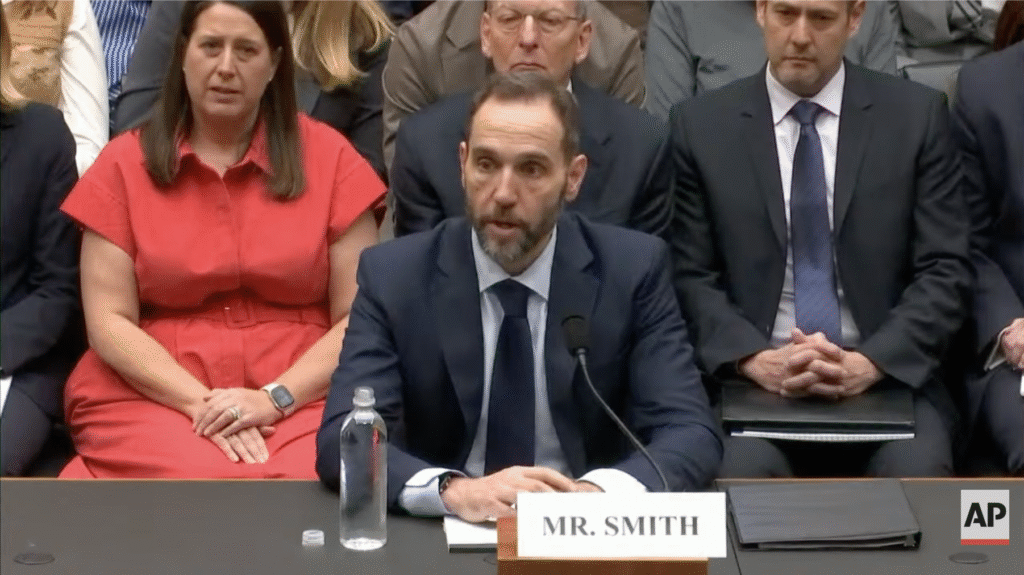
Special Counsel Jack Smith, appointed by Attorney General Merrick Garland in 2022, is leading investigations into Trump, including allegations related to attempts to overturn the 2020 presidential election results. Smith's appointment and actions have been contentious, with critics like Senate Judiciary Committee Chairman Chuck Grassley labeling his investigations as politically charged and lacking lawful authority. In July 2024, U.S. District Judge Aileen Cannon ruled that Smith's appointment was unlawful, adding complexity to the ongoing legal and political debates surrounding these probes.
The FBI's surveillance efforts are part of a broader investigation known as "Arctic Frost," which reportedly targeted over 400 Republicans associated with Trump. Grassley has compared the scope of these actions to historical political scandals, suggesting that the FBI's conduct under the Biden administration may surpass the severity of Watergate. The surveillance included obtaining personal cell phone records of eight Republican senators and other political figures, intensifying concerns about the potential misuse of investigative tools for partisan purposes.
What's at stake
Despite the gravity of these allegations, Democratic lawmakers have generally refrained from publicly addressing the FBI's surveillance practices. Attempts to solicit comments from members of the Senate Judiciary Committee, such as Amy Klobuchar and Richard Blumenthal, yielded no responses. While some Democrats have defended Smith and urged that he be allowed to testify in committee hearings, others, like Senate Judiciary Committee ranking member Dick Durbin, have criticized the focus on investigating the investigators. Durbin suggested that the committee should instead concentrate on alleged abuses of power by the current administration, without directly addressing the surveillance concerns.
Republican Senator Ron Johnson, who was among those surveilled, expressed frustration over what he described as a partisan dragnet aimed at crippling political opponents. Similarly, Mark Davis of the Georgia Republican Party’s Election Confidence Task Force condemned the FBI's surveillance as a violation of privacy and called for accountability. These reactions highlight the deep partisan divisions surrounding the issue and underscore the broader implications for trust in federal law enforcement agencies.
The stakes in this controversy are significant, as they touch on the integrity of federal investigations and the potential for political bias within law enforcement. The FBI's actions raise questions about the limits of surveillance authority and the safeguards needed to prevent misuse. The silence from many Democratic lawmakers may contribute to perceptions of partisanship and erode public confidence in the impartiality of federal institutions. At the same time, the ongoing investigations and legal challenges continue to unfold, keeping the issue at the forefront of political and judicial discourse.
Looking ahead, the situation is likely to remain fluid as calls for transparency and accountability grow louder. Jack Smith's investigations will proceed amid ongoing debates about the legitimacy of his appointment and the scope of his authority. Congressional committees may hold hearings to examine the FBI's surveillance practices and the broader implications for civil liberties. Public scrutiny and media coverage are expected to intensify, potentially influencing policy discussions on the oversight of federal investigative agencies. Observers will be watching closely to see how the Biden administration and the FBI respond to these concerns and whether reforms or legal rulings will emerge in the coming months.
Why it matters
The FBI's surveillance of Trump allies raises concerns about potential political bias in federal investigations. Critics argue that such surveillance may represent an abuse of investigative authority for partisan purposes. Democratic lawmakers' limited public response fuels debate over accountability and transparency.
Legal challenges to Special Counsel Jack Smith's appointment complicate the legitimacy of ongoing probes. The controversy highlights broader issues about the balance between national security and civil liberties.
Key facts & context
The FBI conducted surveillance on Kash Patel and Susie Wiles during 2022 and 2023 while they were private citizens. A phone call between Susie Wiles and her attorney was reportedly recorded by the FBI in 2023. Special Counsel Jack Smith was appointed in 2022 to investigate Trump-related matters, including the 2020 election.
U.S. District Judge Aileen Cannon ruled in July 2024 that Smith's appointment was unlawful. The FBI's investigation, known as "Arctic Frost," targeted over 400 Republicans connected to Trump. Senate Judiciary Committee Chairman Chuck Grassley criticized the FBI's actions as politically motivated and compared them to Watergate.
The FBI subpoenaed phone records of eight Republican senators and other political figures. Democratic lawmakers such as Amy Klobuchar and Richard Blumenthal have not publicly commented on the surveillance allegations. Senate Judiciary Committee ranking member Dick Durbin urged focus on alleged abuses by the current administration rather than investigating the investigators.
Republican Senator Ron Johnson described the FBI's actions as a partisan dragnet aimed at political opponents. Mark Davis of the Georgia Republican Party called for accountability regarding the FBI's surveillance practices.
Timeline & key developments
2026-02-27: FBI's Surveillance of Trump Allies Raises Concerns Amid Silence from Democrats. Additional reporting on this topic is available in our broader archive and will continue to shape this timeline as new developments emerge.
Primary sources
Further reading & references
- (Additional background links will appear here as we cover this topic.)
Related posts
- Democrats Signal Renewed Plans to Pursue Legal Action Against Trump After Presidency
- Trump’s State of the Union Address Sparks Debate Over Government’s Duty to Protect Citizens
- AGA Director Proposed Infiltration of Trump's 2016 Transition Team
- James Comey Indicted for Obstruction and False Statements
- Calls for Presidential Pardons for Trump Electors Amid Ongoing Legal Challenges
- James Comey Indicted on Two Counts by Grand Jury