TLT Explains
Democrats Oppose SAVE America Act Over Concerns It Could Restrict Voter Eligibility
What's happening
The Safeguard American Voter Eligibility (SAVE) America Act is a legislative proposal that seeks to amend the National Voter Registration Act by requiring documentary proof of citizenship for voter registration and identification in federal elections. While the bill passed the House with limited bipartisan support, it has encountered significant opposition in the Senate, where Democrats uniformly oppose it and some Republicans have expressed reservations. The legislation aims to tighten voter eligibility requirements by replacing the current system, which relies on a simple attestation of citizenship, with a more stringent documentation process.
The current federal voter registration form allows individuals to attest to their citizenship under penalty of perjury, but it does not require submission of citizenship documents. Critics of the SAVE America Act argue that the existing system is sufficient and that the new requirements could create barriers for eligible voters, particularly among minority and lower-income populations. Supporters contend that requiring proof of citizenship is a necessary safeguard to prevent noncitizens from registering and voting, thereby protecting the integrity of elections.
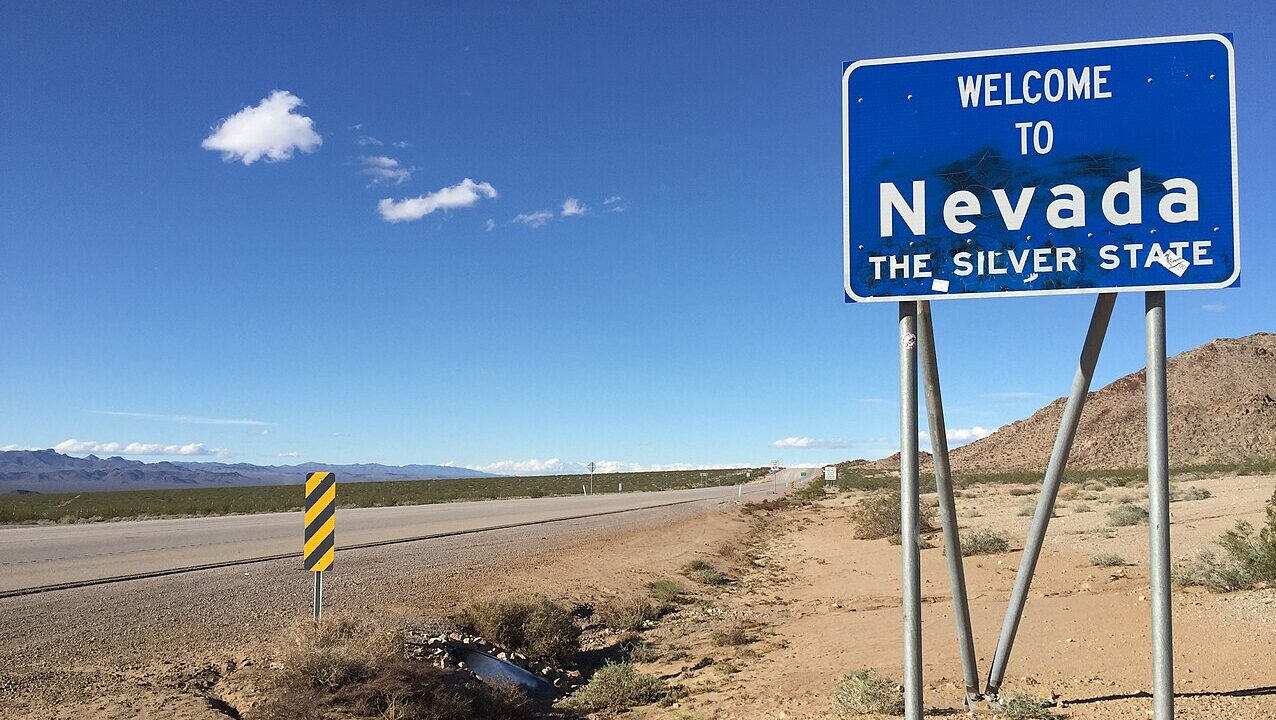
The debate over the SAVE America Act has intensified due to research conducted by Yale Law School Professor Ian Ayres and research fellow Jacob Slaughter. Their analysis highlights that while the majority of registered voters nationwide possess the necessary citizenship documentation, there are significant disparities at the state level. For example, in New Mexico, Democrats are 13 percentage points less likely than Republicans to have the required documents, and in Nevada, the gap is 5.3 percentage points. These differences could shift the political balance in these battleground states if the law is enacted.
Ayres and Slaughter project that the SAVE America Act could give Republicans a 3.3-percentage-point advantage in New Mexico and potentially transform Nevada from a competitive state into a Republican stronghold. Their research suggests that eight out of 15 swing states could experience a rightward shift in voter registration as a result of the documentation requirements. Despite these potential effects, the authors describe the overall benefits of the legislation as "minuscule" and acknowledge that roughly 4 million registered voters nationwide currently lack documentary proof of citizenship.
What's at stake
The implications of the bill extend beyond voter eligibility to broader questions about election integrity and access. Supporters argue that requiring proof of citizenship is a common-sense measure to prevent unauthorized voting and enhance public confidence in elections. Opponents, primarily Democrats, counter that the law would disproportionately disenfranchise eligible voters, especially minorities and economically disadvantaged groups, by imposing burdensome documentation requirements that could discourage or prevent them from registering and voting.
The partisan divide over the SAVE America Act reflects longstanding tensions in U.S. politics regarding voting rights and election security. Republicans generally advocate for stricter voter identification laws as a means to combat voter fraud, while Democrats emphasize the importance of expanding access to the ballot and protecting against disenfranchisement. This disagreement has contributed to the bill's stalled progress in the Senate, where the Republican majority has not been able to secure enough support to advance the legislation amid Democratic opposition and some Republican hesitancy.
The stakes of this debate are particularly high in battleground states such as New Mexico and Nevada, where changes in voter eligibility rules could influence the outcome of future elections. These states have diverse populations with varying levels of access to documentation, making the potential impact of the SAVE America Act more pronounced. The legislation’s fate will likely affect not only voter participation rates but also the broader political landscape, shaping the balance of power in Congress and presidential elections.
Looking ahead, the SAVE America Act faces an uncertain future in the Senate. With no Democratic support and some Republicans reluctant to back the bill, it remains stalled for now. However, the issue of voter eligibility and election integrity is expected to remain a contentious topic in upcoming legislative sessions and election cycles. Observers will be watching closely to see whether lawmakers can reach a compromise that addresses concerns about both election security and voter access, or if the partisan divide will continue to prevent meaningful reform.
As the debate continues, key decision points will include whether the Senate will bring the bill to a vote, potential amendments to address concerns about disenfranchisement, and how state-level policies might evolve in response to federal proposals. The outcome will have lasting implications for the administration of elections and the political dynamics in critical swing states, making this a pivotal issue to watch in the coming months and years.
Why it matters
The SAVE America Act could significantly alter voter eligibility requirements, impacting electoral outcomes in key battleground states. Current federal voter registration relies on a simple citizenship attestation, which some argue is insufficient to prevent ineligible voting. Research indicates that disparities in documentation possession between Democrats and Republicans vary by state, potentially shifting political advantages.
The legislation raises concerns about disenfranchisement, particularly among minority and economically disadvantaged voters. Supporters view proof of citizenship as essential for election integrity, while opponents see it as a barrier to voter access. The bill’s stalled progress reflects deep partisan divisions over voting rights and election security.
Its fate will influence the balance of power in future elections and ongoing debates about electoral reform.
Key facts & context
The SAVE America Act seeks to amend the National Voter Registration Act to require documentary proof of citizenship for federal election registration. The bill passed the House with minimal bipartisan support but is stalled in the Republican-controlled Senate due to opposition from Democrats and some Republicans. Currently, the federal voter registration form requires only a citizenship attestation, not documentary proof.
Yale Law School Professor Ian Ayres and research fellow Jacob Slaughter found that 89% of Democrats and 90% of Republicans nationwide have qualifying citizenship documents. In New Mexico, Democrats are 13 percentage points less likely than Republicans to have required documentation; in Nevada, the gap is 5.3 percentage points. The SAVE America Act could create a 3.3-percentage-point Republican advantage in New Mexico and shift Nevada toward the GOP.
Approximately 4 million registered voters nationwide lack documentary proof of citizenship. Democrats argue that the bill would disproportionately disenfranchise minority and low-income voters. Republicans argue the legislation is necessary to prevent noncitizen voting and protect election integrity.
The bill’s stalled status reflects ongoing partisan disagreements over voting rights legislation. The debate over the SAVE America Act is part of a broader national discussion on election security and voter access. The legislation’s impact would be most significant in swing states with diverse populations and varying access to documentation.
Timeline & key developments
2026-05-04: Democrats Oppose SAVE America Act Amid Concerns Over Voter Eligibility. Additional reporting on this topic is available in our broader archive and will continue to shape this timeline as new developments emerge.
Primary sources
Further reading & references
- (Additional background links will appear here as we cover this topic.)
Related posts
- Republican Senators Seek to End Filibuster to Pass Controversial SAVE America Act on Voter ID
- Senate Leader McConnell Faces GOP Pressure to Advance Controversial SAVE Act on Voting Rules
- Canadian Citizen Faces Charges for Illegal Voting in Multiple Massachusetts Elections
- Senate Republicans Debate SAVE America Act Amid Divisions Over Voter ID and Priorities
- Dems Try To Sabotage Push For Proof Of Citizenship To Vote