TLT Explains
California Primary Elections Marked by Low Turnout and Delayed Results Amid Political Tensions
What's happening
Preliminary results from California's recent primary elections reveal a voter turnout of less than 25 percent, with many ballots still uncounted several days after Election Night. California Secretary of State Shirley Weber announced these figures, highlighting ongoing delays in finalizing results. The slow counting process has drawn criticism from various observers who question the efficiency and reliability of the state's electoral system. Some have even compared the situation to elections in less developed regions, raising concerns about administrative preparedness and voter confidence.
This year's primaries also underscore a political landscape dominated by Democratic candidates, many of whom secured significant leads or outright victories. The low voter engagement combined with the apparent lack of competitive races has sparked debate about accountability and governance in California. Critics argue that entrenched incumbents continue to hold power despite persistent challenges such as rising crime rates, homelessness, and public safety concerns. The political environment appears to favor established figures, leaving some voters feeling disconnected from the electoral process and their representatives.
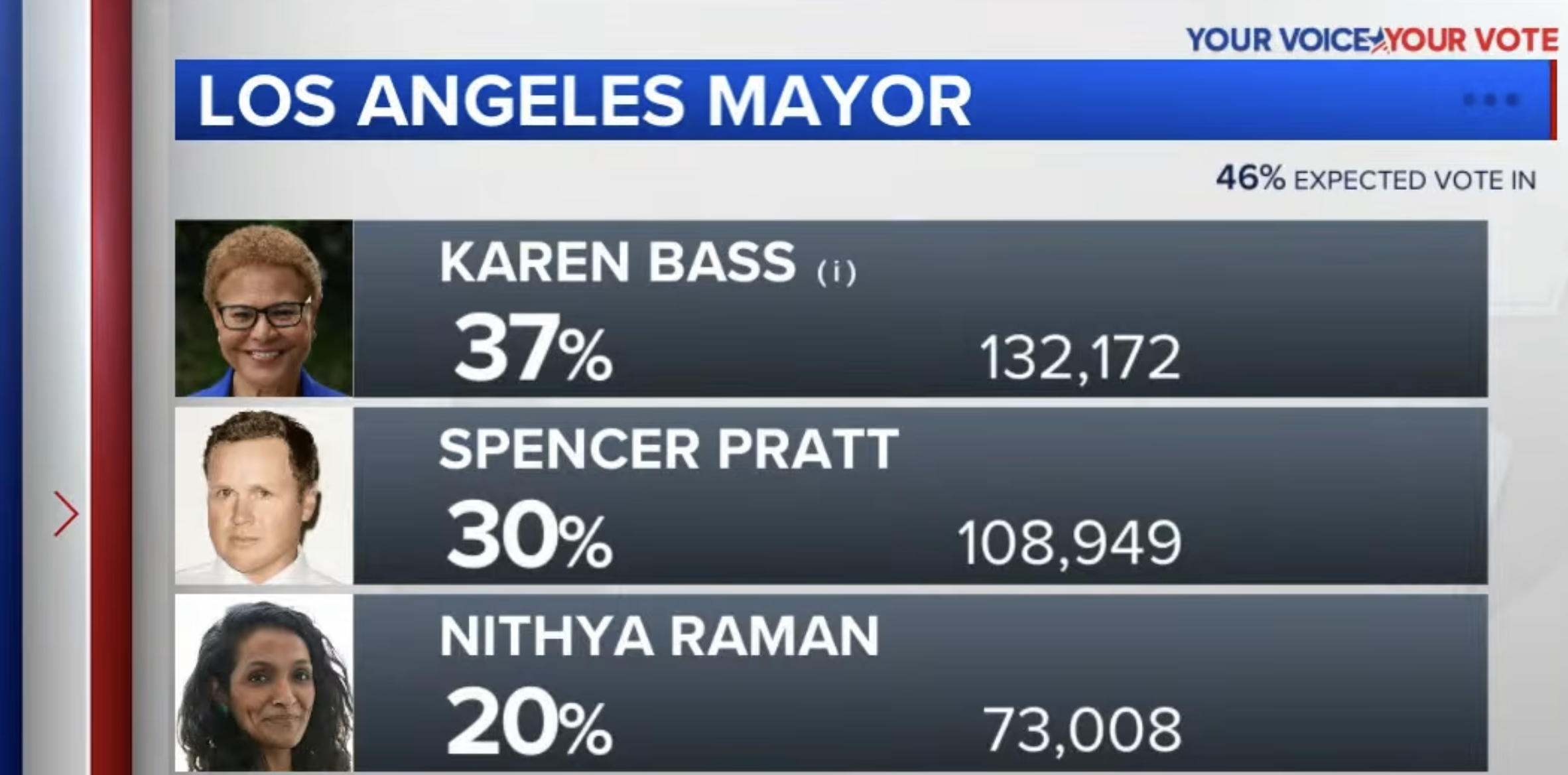
In the Los Angeles mayoral race, incumbent Karen Bass is positioned to advance to the general election with roughly 60 percent of the vote. This outcome comes amid ongoing issues in the city, including a surge in violence and drug-related problems. Bass faced public backlash for her absence during a recent wildfire crisis, which affected many residents and raised questions about her leadership. The controversy was highlighted by media coverage, including a pointed inquiry from a correspondent who asked if she owed citizens an apology for being absent while their homes were at risk. This incident exemplifies the broader tensions between elected officials and constituents in California's urban centers.
The Los Angeles County Board of Supervisors also saw significant victories for Democratic candidates, including Lindsey P. Horvath, who secured her seat without the need for a runoff in November. However, the board has drawn criticism for adopting policies perceived as increasingly left-leaning and out of touch with community needs. These developments reflect a wider trend of Democratic dominance in local governance, which some argue contributes to a lack of diverse political representation. The board's direction has implications for how the county addresses pressing issues such as homelessness, public safety, and economic inequality.
What's at stake
Meanwhile, the Los Angeles County Sheriff’s Department remains under scrutiny for its handling of crime and public safety. Reports indicate challenges related to understaffing and excessive overtime, which have raised concerns about officer fatigue and the department's overall effectiveness. Despite these operational difficulties, incumbent Sheriff Robert Luna appears likely to advance in the election, suggesting continued voter support for current leadership. This outcome illustrates the complex dynamics at play, where public dissatisfaction with services coexists with loyalty to familiar political figures.
State Senator Scott Wiener is also expected to win the seat vacated by Nancy Pelosi, continuing his tenure in California politics. Wiener's campaign has been controversial, particularly due to his advocacy for progressive policies that some critics argue undermine public safety. Supporters counter that his approach addresses systemic issues and aims to reform entrenched problems within the state. This contest highlights the ongoing debate within California's Democratic Party between progressive and moderate factions, reflecting broader ideological divisions that could shape future policy decisions.
The primary elections have further solidified Democratic control over the state legislature, with several incumbents facing little to no opposition. For example, Corey Jackson, known for authoring California’s “anti-book ban” bill, is on track for a comfortable victory. Meanwhile, Republicans face significant challenges, particularly in the gubernatorial race where Steve Hilton leads over incumbent Xavier Becerra but remains behind the combined Democratic vote. These results suggest that the November general election will likely continue the trend of Democratic dominance, although the GOP hopes to capitalize on any shifts in voter sentiment.
As the state continues counting ballots and finalizing results, the implications of the primaries are becoming clearer. The low turnout and delayed reporting have sparked calls for a reassessment of voter engagement strategies and electoral processes to better connect elected officials with their constituents. California faces numerous challenges, including public safety, homelessness, and political polarization, all of which were reflected in the primary outcomes. The elections have underscored the need for greater accountability and responsiveness from political leaders to address the concerns of a diverse and often disaffected electorate.
Looking ahead, attention will focus on how candidates and elected officials respond to the criticisms raised during the primaries. The general election in November will serve as a critical test of voter engagement and political momentum, particularly in key races such as the Los Angeles mayoral contest and state legislative seats. Observers will also watch for any reforms to election administration aimed at improving the speed and transparency of results. Ultimately, the coming months will reveal whether California’s political landscape can evolve to better meet the needs of its residents amid ongoing social and economic challenges.
Why it matters
Low voter turnout in California's primary elections raises concerns about democratic engagement and representation. Delayed ballot counting has sparked criticism of the state's election administration and transparency. Democratic dominance in key races highlights questions about political competition and accountability.
Ongoing public safety and homelessness issues challenge the effectiveness of incumbent officials. Controversies surrounding leadership during crises have intensified scrutiny of elected representatives. The primary results may influence policy directions and political dynamics ahead of the November general election.
Calls for electoral reform and improved voter outreach reflect broader concerns about governance in California.
Key facts & context
California Secretary of State Shirley Weber reported less than 25 percent voter turnout in the 2026 primary elections. Many ballots remained uncounted days after Election Night, delaying final results. Incumbent Los Angeles Mayor Karen Bass secured about 60 percent of the vote to advance to the general election.
Lindsey P. Horvath won a Los Angeles County Board of Supervisors seat outright, avoiding a runoff. Los Angeles County Sheriff Robert Luna is expected to advance despite criticisms of understaffing and overtime issues. State Senator Scott Wiener is poised to win the seat vacated by Nancy Pelosi amid debates over progressive policies.
Corey Jackson, author of the 'anti-book ban' bill, is on track for a legislative victory. Republican Steve Hilton leads over incumbent Xavier Becerra in the gubernatorial race but trails combined Democratic votes. Critics have likened California’s election delays to those in less developed regions, raising concerns about administrative efficiency.
The primary elections suggest a potential increase in Democratic supermajorities in the state legislature. Public dissatisfaction with governance coexists with continued support for Democratic candidates in many races. Calls for reassessment of voter engagement and election processes are growing in response to the primary outcomes.
Timeline & key developments
2026-06-03: California Primary Elections Show Low Turnout and Controversial Outcomes. Additional reporting on this topic is available in our broader archive and will continue to shape this timeline as new developments emerge.
Primary sources
Further reading & references
- (Additional background links will appear here as we cover this topic.)
Related posts
- Nebraska Senate Primary Draws Scrutiny Over Alleged Election Manipulation and Candidate Legitimacy
- Eric Swalwell Faces Sexual Harassment Allegations During California Governor Campaign
- Critics of Progressive Policies in California Express Discontent Amidst Political Stagnation
- Los Angeles City Controller Kenneth Mejia Faces Establishment Pushback Amid Fraud Investigations
- Leftist Politicians Are More Dangerous Than Radicals On Podcasts
- Media Debate Over Political Rhetoric Intensifies Following Recent Violence