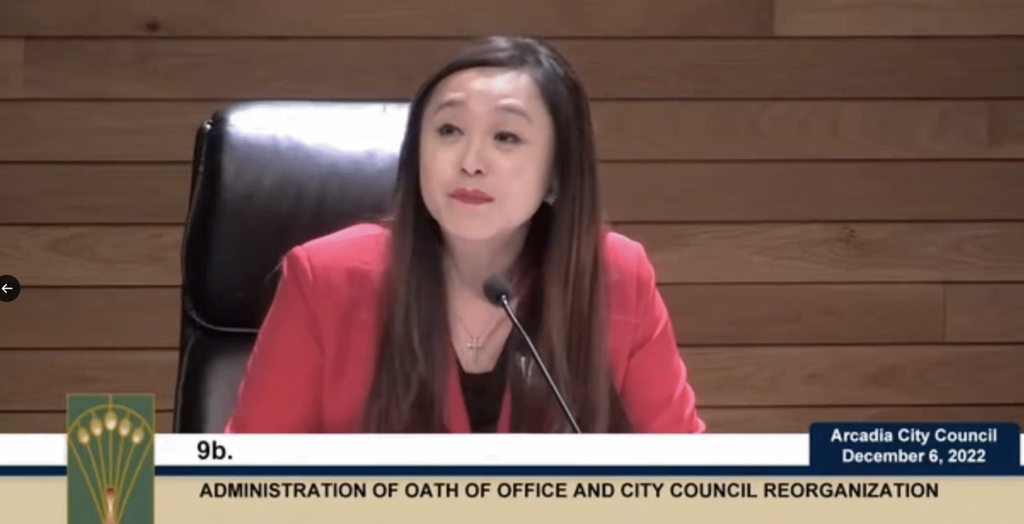
Arcadia Mayor Eileen Wang is under increasing pressure to resign following the sentencing of her former fiancé, Yaoning "Mike" Sun, to four years in federal prison for acting as an unregistered agent of the Chinese government. Critics argue that Wang's association with Sun raises serious questions about foreign influence in local politics, particularly given the nature of Sun's activities on behalf of the Chinese Communist Party (CCP).
Explainer Election Integrity and Voter Access in California: A Complex Landscape
Sun, a Chinese national and U.S. green card holder, was sentenced in early February after pleading guilty to charges stemming from his actions between 2022 and early 2024. He was found to have carried out directives from Chinese officials without notifying U.S. authorities, including surveilling groups deemed threats by the CCP, such as Falun Gong practitioners and advocates for Taiwan's independence.
During a notable incident in 2023, Sun monitored the movements of Taiwan's then-President Tsai Ing-wen during her visit to Southern California, photographing supporters and opponents and reporting back to the Chinese Consulate in Los Angeles. Sun's activities were coordinated with another Chinese national, John Chen, who acted as an intermediary with the Chinese government. Chen was sentenced to 20 months in prison for similar offenses.
Wang's Connection to Sun
Wang, who immigrated from China over three decades ago, was engaged to Sun at the time of his arrest. Sun served as her campaign consultant and treasurer during her successful 2022 run for the Arcadia City Council. Following her election, Wang publicly acknowledged Sun as her fiancé and credited him with her electoral success. However, she later claimed their relationship had ended eight months prior to his arrest and denied he was ever her fiancé, a statement contradicted by recordings of her previous remarks.
Despite the controversy, Wang was sworn in as mayor in February 2026. She has faced calls for resignation from various community members and critics who argue that her ties to Sun compromise her integrity and ability to serve. Wang has not been accused of any wrongdoing and has not faced an investigation, but her silence on the matter has drawn further scrutiny.
Broader Implications of Foreign Influence
This case highlights concerns about the CCP's influence operations in the United States, particularly through its United Front Work Department, which seeks to cultivate relationships with local politicians to promote Beijing's interests. A recent report by the Jamestown Foundation noted that such operations often go unnoticed, especially in lower-profile elections where oversight is less stringent.
Experts warn that the CCP's strategy involves building relationships with "China-friendly" officials as a long-term investment, potentially undermining democratic processes. The report identified 967 organizations linked to the United Front in the U.S., none of which are registered under the Foreign Agents Registration Act (FARA).
In a similar vein, the case of Linda Sun, a former aide to New York governors, underscores the challenges in countering CCP influence. She and her husband face charges of acting as agents for China, with their trial ending in a mistrial in December 2025. The government plans to retry the case, reflecting the complexities of prosecuting such influence operations.
Community Response and Future Actions
The community's response to Wang's situation has been mixed, with some calling for accountability while others defend her right to serve. Supporters argue that Wang has not been implicated in any wrongdoing and should not be held responsible for her ex-fiancé's actions. However, critics maintain that her connections to Sun warrant a closer examination of her role and the potential implications for local governance.
As the situation unfolds, experts emphasize the need for greater public awareness and policy measures to counter foreign influence in U.S. politics. Strengthening enforcement of FARA and increasing scrutiny of campaign finance are among the recommendations to ensure transparency and accountability in political contributions linked to foreign entities.
Wang's case serves as a reminder of the ongoing challenges posed by foreign influence in American politics, highlighting the importance of vigilance and transparency in safeguarding democratic integrity.