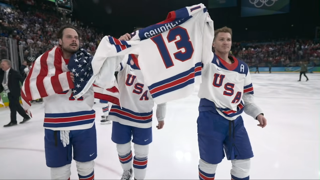
Team USA hockey player Quinn Hughes expressed his deep love for America after scoring the game-winning goal in an overtime victory against Sweden on Wednesday. Hughes, who is 26 years old, made his heartfelt remarks during a post-game press conference, where he highlighted the patriotic atmosphere created by fans waving American flags throughout the arena. "It’s special. … I love the U.S.," Hughes stated. "It’s the greatest country in the world, so [I’m] happy to represent it here with these guys. … It’s really special." His comments reflect a strong sense of national pride that resonated with many fans and supporters.
Hughes’ remarks come amid a backdrop of mixed sentiments among American athletes regarding their representation at the Winter Olympics. While some athletes have publicly criticized various aspects of U.S. policy, Hughes’ display of patriotism stands in stark contrast to those views. The stakes are particularly high as Team USA aims to secure a spot in the gold medal game, with Hughes’ crucial goal propelling the team into the semifinals of the tournament.
In the match against Sweden, Team USA initially took the lead with a goal from Dylan Larkin midway through the second period. However, Sweden managed to equalize late in the third period after pulling their goalie for an extra attacker, which forced the game into overtime. Hughes’ decisive goal in the extra period ultimately secured a 2-1 win for the Americans, showcasing both his skill and determination.
Upcoming Challenges
Looking ahead, Team USA will face Slovakia on Friday, with the winner advancing to compete for the gold medal on Sunday. The losing team will have the opportunity to play for the bronze medal against either Canada or Finland, who are set to compete against each other on the same day. This upcoming match is critical, and Hughes acknowledged the challenges his team faced during the match against Sweden. He expressed a desire to focus on the next game, emphasizing the importance of preparation. "You just want to move on and be ready to go, and get your feet up the next 24 hours and then be ready to go," he said, indicating his commitment to the team's success.
Diverging Perspectives
Hughes’ celebration of American pride contrasts sharply with the sentiments expressed by some of his teammates. Team USA skier Hunter Hess recently shared his mixed feelings about representing the U.S., citing dissatisfaction with certain national policies. "It brings up mixed emotions to represent the U.S. right now, I think. It’s a little hard. There’s obviously a lot going on that I’m not the biggest fan of, and I think a lot of people aren’t," Hess stated. He later attempted to clarify his remarks on social media, indicating that his feelings were complex and nuanced.
Critics of the current Olympic team culture argue that such sentiments reflect a broader trend of American athletes expressing dissatisfaction with their country. However, Hughes’ comments have been welcomed by many as a refreshing display of national pride. Supporters of Hughes have not publicly responded to the criticisms raised by athletes like Hess, leaving a gap in the ongoing discussion about patriotism in sports.
As the Winter Olympics continue, the contrasting views among athletes may shape public perception of American representation on the global stage. Hughes’ commitment to celebrating his country stands out amid a complex landscape of opinions, underscoring the diverse perspectives within the athletic community. The ongoing dialogue about patriotism and representation in sports is likely to continue as the competition progresses, highlighting the varied experiences and beliefs of American athletes on this international platform.