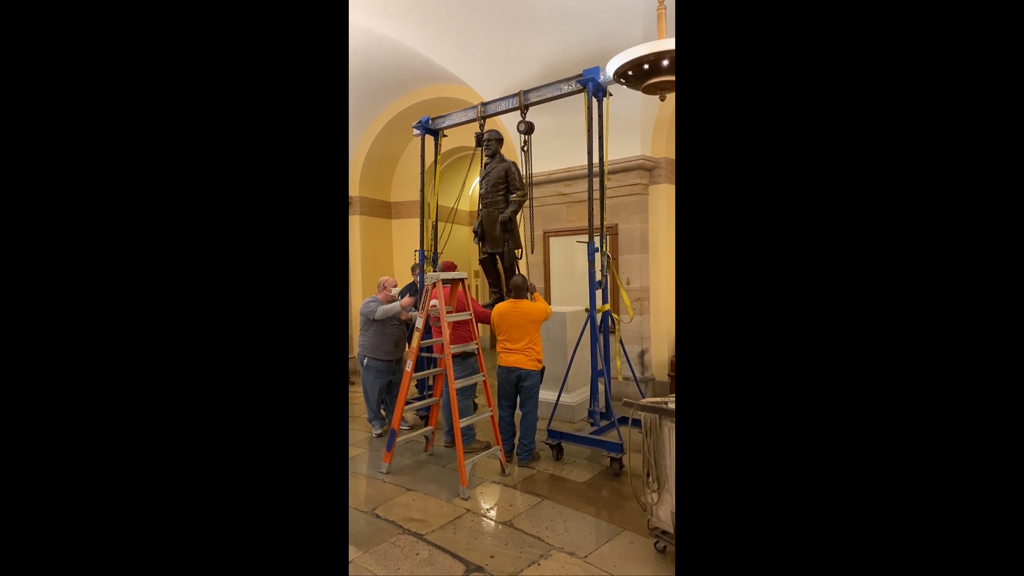
Virginia has officially replaced its statue of Confederate General Robert E. Lee in the U.S. Capitol with a new statue honoring civil rights activist Barbara Rose Johns. This significant installation took place on December 17, 2025, marking a pivotal shift in how the state chooses to represent its historical figures at the national level. The decision to honor Johns, who led a student strike in 1951 to protest segregated schools, has sparked extensive discussions about the narratives surrounding American history and the legacy of figures like Lee. Critics of the change argue that removing Lee's statue erases an important part of Virginia's history, while supporters contend that honoring Johns reflects a more inclusive and just representation of the state's past.
Explainer Navigating Virginia's Electoral Landscape: Key Issues and Reforms
The statue of Lee had stood in the Capitol for 111 years before it was removed in December 2020 amid growing calls for the reevaluation of Confederate symbols. Virginia Governor Glenn Youngkin, a Republican, emphasized the importance of Johns' legacy, stating, "You can’t tell the story of Virginia, or the story of how our nation overcame segregation, without telling the story of Barbara Rose Johns."
Historical Context
Robert E. Lee is a complex figure in American history, often viewed through the lens of his role in the Civil War and his leadership of Confederate forces. Supporters of Lee argue that he should be recognized for his military skills and personal honor, despite the controversies surrounding his legacy. Many Americans, including historical figures like Franklin D. Roosevelt, have previously acknowledged Lee's contributions to the nation's history. This recognition often highlights the duality of Lee's legacy, where he is seen both as a military leader and as a symbol of the Confederacy.
In contrast, the removal of Lee's statue is viewed by some as a necessary step toward addressing the historical injustices associated with the Confederacy. Critics of the statue's removal argue that it represents a broader trend of erasing history rather than confronting it. They assert that understanding the complexities of figures like Lee is essential to grasping the full narrative of American history, which includes both triumphs and failures.
Reactions to the Change
The replacement of Lee's statue with one of Johns has drawn mixed reactions from various segments of the public. Supporters of the change argue it reflects a commitment to civil rights and acknowledges the contributions of marginalized figures in history. However, some critics, including historians and political commentators, argue that this shift diminishes the importance of understanding all aspects of Virginia's past, including its Confederate heritage.
One critic noted, "You can’t tell the history of Virginia without telling the story of Lee, actually," emphasizing the need for a balanced historical narrative. This perspective highlights the ongoing debate about how history should be remembered and represented in public spaces, where the complexities of historical figures must be acknowledged rather than simplified.
Broader Implications
The debate over the statues reflects larger societal tensions regarding race, history, and identity in America. As institutions and communities grapple with how to honor historical figures, the conversation often centers on the implications of these choices for contemporary society. Some argue that removing statues of controversial figures is a step toward healing historical wounds, while others see it as an attempt to rewrite history.
In recent years, the removal of Confederate statues has become a flashpoint in discussions about race and representation in the United States. Proponents of the removals argue that these symbols perpetuate racism and division, while opponents contend that they are part of the nation's heritage that should be preserved and understood in context. This ongoing dialogue reflects the complexities of navigating America's historical landscape.
As Virginia moves forward with its new representation in the Capitol, the conversation surrounding historical memory and the legacy of figures like Lee and Johns will likely continue to evolve. The decision to honor Johns may resonate with those advocating for a more inclusive narrative, but it also raises questions about how society reconciles its past with its present.
Governor Youngkin's administration has not yet responded to the criticisms regarding the removal of Lee's statue, leaving some questions about the state's approach to historical representation unanswered. The ongoing dialogue about these issues reflects the complexities of navigating America's historical landscape as it seeks to honor both its triumphs and its failures.