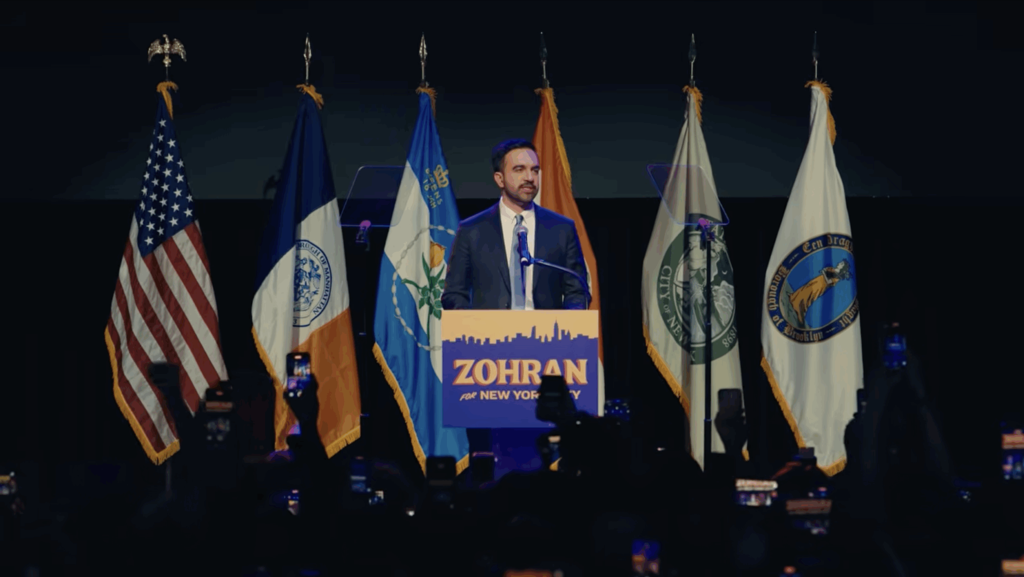
Zohran Mamdani, a candidate with a background in Uganda, won the New York City mayoral race, drawing significant support from foreign-born voters. An October survey from Patriot Polling indicated that 62 percent of foreign-born New Yorkers backed Mamdani, compared to just 31 percent of American-born voters. This outcome has sparked discussions about the implications of mass legal immigration on American values and governance.
Mamdani, who identifies as a communist, emphasized a government-centric approach during his victory speech, stating, "We will prove that there is no problem too large for government to solve, and no concern too small for it to care about." Critics argue that such sentiments reflect a departure from the principles of personal liberty and limited government that underpin the American republic.
Supporters of Mamdani included a diverse array of immigrants, which he highlighted in his speech, mentioning various ethnic groups contributing to the city's fabric. However, some commentators express concern that many of these individuals may not share the foundational values of republicanism and self-governance.
The Center for Immigration Studies reported that in 2023, 54 percent of households headed by immigrants utilized one or more major welfare programs, compared to 39 percent for native-born households. This statistic raises questions about the long-term impact of immigration on American social systems and responsibilities.
Mamdani's victory has been interpreted by some as evidence that newcomers from countries with different governance structures may struggle to embrace American ideals. Critics point to the political climates in countries like Uganda and Somalia, where government operates under different principles, as factors that could influence immigrants' views on civic responsibility.
Freedom House describes Uganda as a nation where the ruling party maintains power through intimidation and patronage, while Somalia faces challenges in enforcing civic freedoms. These conditions contrast sharply with the American tradition of limited government and individual rights.
Mamdani's election has reignited debates about the nature of immigration and its effects on American society. Some argue that the influx of individuals from nations with less emphasis on self-reliance could lead to a dependency on government assistance, undermining the principles of personal responsibility that are central to American identity.
As Mamdani's administration begins, the implications of his victory will likely continue to be a focal point in discussions about immigration policy and its alignment with American values. The outcome raises critical questions about the future of governance in a city shaped by diverse immigrant populations.