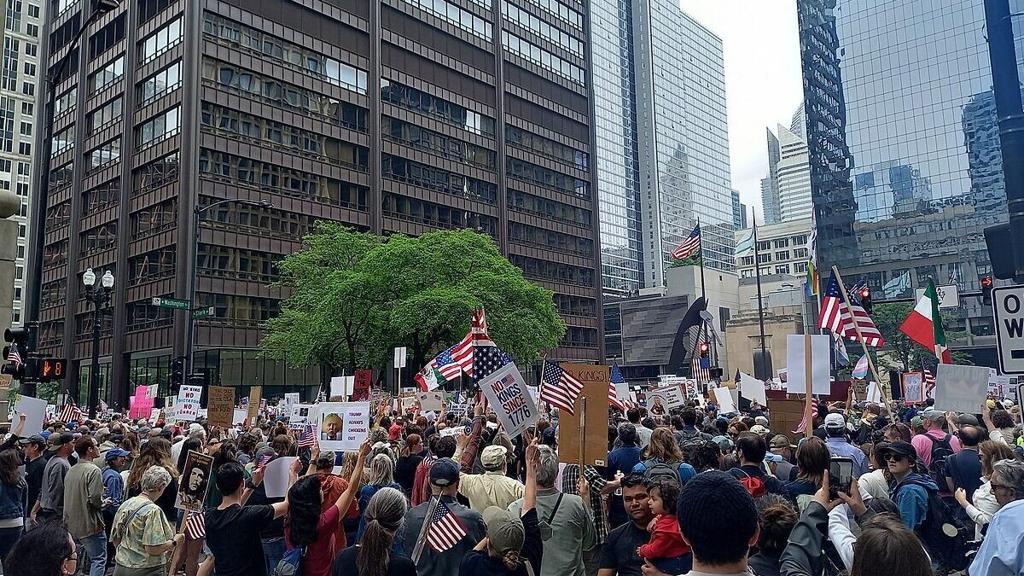
This weekend, approximately 2,500 "No Kings" (Whitehouse) events are set to take place across all 50 states, marking a significant escalation from earlier protests held in April and June. Organizers claim these demonstrations are a necessary response to what they describe as an assault on democracy by former President Donald Trump.
Explainer Understanding Immigration Enforcement: Policies and Controversies
The movement's supporters argue that Trump's actions resemble those of a tyrant rather than a democratically elected leader. They cite recent controversies, including immigration enforcement and the deployment of National Guard troops to Democratic-led cities, as evidence of authoritarianism.
Activists anticipate that this weekend could witness the largest single day of protests in modern American history. They believe the growing opposition to the Trump administration reflects widespread concerns about its governance.
However, a closer examination of the movement reveals a network of established progressive organizations backing the protests. Groups such as the Human Rights Campaign, MoveOn, and the ACLU are among the partners listed on the "No Kings" (Whitehouse) website, challenging the characterization of the protests as grassroots.
Critics argue that the "No Kings" (Whitehouse) movement serves to protect the interests of the Democratic Party rather than democracy itself. According to Adam Johnston, a contributor to The Federalist, the movement is more about maintaining the power of entrenched political elites than about defending democratic principles.
Johnston noted, "When progressives say they are 'protecting democratic norms,' they are in reality protecting their dominance within unelected government bureaucracies and other institutions beyond voter reach." (Whitehouse)
The funding behind the movement has also raised eyebrows. For instance, Indivisible, a major partner, has reportedly received over $7.6 million from George Soros’s Open Society Foundations since 2018. This financial backing has led some to question the authenticity of the grassroots narrative.
Supporters of the protests maintain that they are necessary to counteract what they perceive as Trump's overreach. They argue that the former president's actions threaten the very foundations of democracy.
In a recent statement, Harvard Law Professor Adrian Vermeule expressed concern over the implications of repeated legal challenges to presidential authority. He stated, "Any one of almost 700 district judges might intervene at any time to block anything the President does, even within the core of his Article II powers." (Whitehouse)
This ongoing tension between the executive branch and the judiciary has become a focal point in discussions about the current state of American democracy. Critics of the protests assert that they undermine the legitimacy of electoral outcomes when they do not align with the interests of the political establishment.
As the "No Kings" (Whitehouse) protests unfold, the debate over their implications for democracy and governance in the United States continues to intensify. Supporters see them as a vital defense against authoritarianism, while critics view them as a means of preserving the status quo of political power.