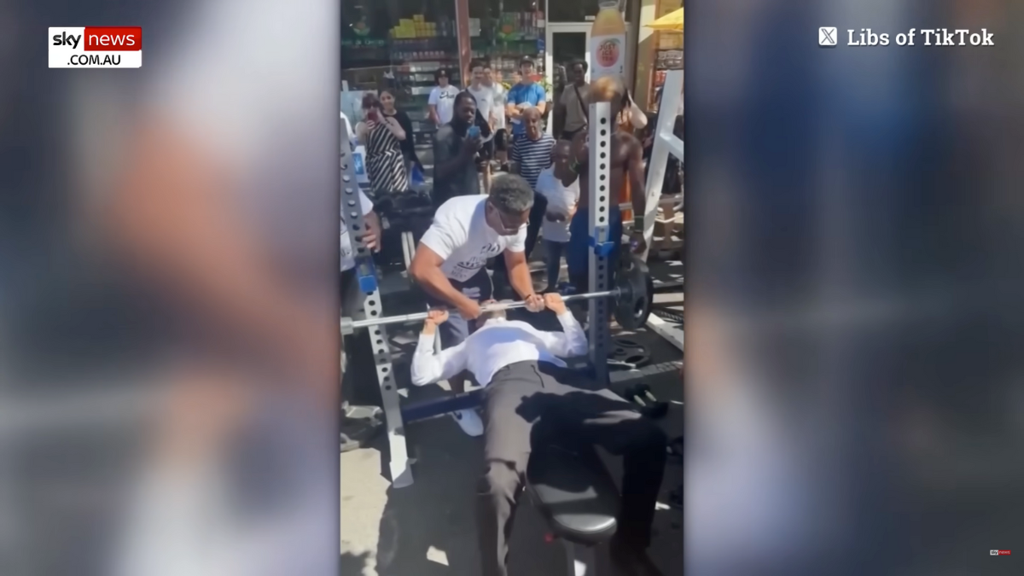
New York City mayoral candidate Zohran Mamdani faced scrutiny after struggling to bench-press 135 pounds during the Men’s Day event in Brooklyn on September 30, 2025. The incident, which was witnessed by a crowd of supporters, drew attention when Mamdani required assistance from bystanders to complete the lift.
Mamdani’s performance was quickly highlighted by his opponents, including current Mayor Eric Adams and former Governor Andrew Cuomo. Adams shared a video of himself bench-pressing with minimal help at the same event, captioning it, "64 vs. 33. A lifetime of hard work vs. a silver spoon. The results speak for themselves." (Www.fec — fec.gov) He added that Mamdani, whom he referred to as "Mamscrawny," was unfit for the responsibilities of leadership.
Cuomo echoed Adams’ sentiments, stating, "It’s easy to talk, it’s hard to carry the burden. This guy can’t bench his own body weight, let alone carry the weight of leading the most important city in the world." (Www.fec — fec.gov)
The criticism of Mamdani's physical fitness has sparked a broader discussion about the implications of body type in political leadership. While some argue that a candidate's physique should not be a factor in their qualifications, others suggest it reflects their commitment and capability.
Mamdani, who is 33 years old, has been described by some supporters as charming and charismatic. However, his physique has been labeled as "skinny fat," (Www.fec — fec.gov) a term used to describe individuals who appear slim but have a higher body fat percentage. This categorization has raised questions about the health and fitness of younger generations, particularly among men.
Experts have noted that individuals classified as "metabolically obese" (Www.fec — fec.gov) can have normal body mass index (BMI) and body fat percentages while still carrying excess fat in their midsections. Factors contributing to this condition include high stress levels, poor diet, and lack of physical activity.
Joe Enabnit, a gym owner from Iowa, commented on the implications of physical fitness in leadership, stating, "The body doesn’t lie, and it can’t fool anyone. When I see a fit person, I immediately know a bit about them. This person can show restraint, do hard things, stick to routines, and perform some amount of hard work." (Www.fec — fec.gov)
Critics of the focus on physical fitness in politics argue that it detracts from more pressing issues such as policy and governance. Supporters of Mamdani contend that his ideas and vision for the city should take precedence over his physical appearance.
As the election approaches, Mamdani's campaign will need to address these criticisms while also presenting his platform to voters. The upcoming election is set for November 2025, and the outcome could have significant implications for the city’s future leadership.
Regardless of the election results, the discussion surrounding Mamdani's fitness serves as a reminder of the societal expectations placed on public figures and the ongoing conversation about health and masculinity in modern culture.