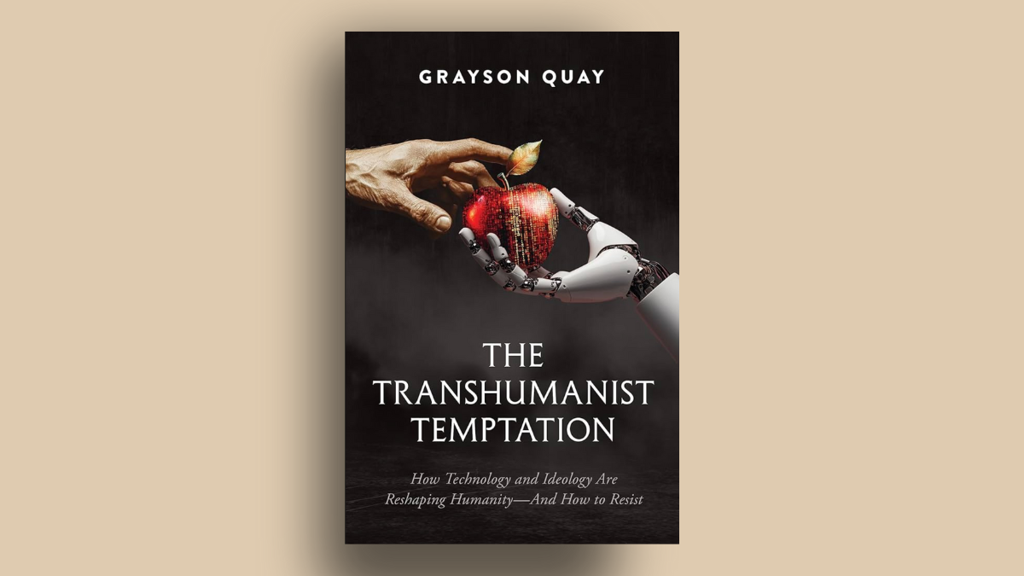
Quay traces the philosophical roots of transhumanism to Enlightenment thinkers like David Hume and Friedrich Nietzsche, who separated human nature from morality and promoted self-definition as a primary goal. This philosophical evolution paved the way for existentialism, which emphasizes personal autonomy and relativism in ethics, ultimately leading to contemporary transhumanist ideologies.
Quay traces the philosophical roots of transhumanism to Enlightenment thinkers like David Hume and Friedrich Nietzsche, who separated human nature from morality and promoted self-definition as a primary goal. This philosophical evolution paved the way for existentialism, which emphasizes personal autonomy and relativism in ethics, ultimately leading to contemporary transhumanist ideologies.
The Quest for Bodily Autonomy
The book highlights the quest for bodily enhancement as a key manifestation of transhumanism. Quay cites the introduction of the birth control pill as a pivotal moment in modern bodily autonomy, illustrating how individuals increasingly view their bodies as objects to be modified. This perspective has led to practices such as transgender surgeries and genetic manipulation, reflecting a broader trend of objectifying the human body.
Quay also discusses the implications of digital technology, suggesting that many transhumanists envision a future where individuals can escape their physical bodies entirely through cyberspace. He points to advancements like Elon Musk's Neuralink, which aims to integrate technology with human biology, potentially blurring the lines between human and artificial intelligence.
The author expresses concern that such developments could lead to a society where human beings and AI exist on the same existential plane, raising questions about the nature of relationships and personhood. Quay warns that the normalization of intimate interactions with AI could signify a troubling acceptance of transhumanist ideals.
Political and Economic Implications
Quay extends his analysis to the political landscape, arguing that modern liberal democracy is inherently transhumanist. He cites thinkers like Patrick Deneen, who assert that liberalism promotes the idea of individuals making completely free choices, unbound by moral or natural laws. This alignment with transhumanism, Quay argues, could lead to authoritarian regimes that promise freedom while ultimately restricting it.
Despite his bleak outlook, Quay acknowledges that not all nations will inevitably succumb to transhumanist totalitarianism. He emphasizes the importance of conservative efforts to uphold foundational principles and resist the encroachment of transhumanist ideologies.
In the economic realm, Quay argues that transhumanism incentivizes individuals to reshape themselves for material gain, often at the expense of meaningful work. He warns that a future dominated by automation and universal basic income could lead to exploitative conditions, where individuals become addicted to consumerism without genuine fulfillment.
In summary, Quay's work presents a critical examination of transhumanism's pervasive influence across various domains, urging readers to reflect on the implications for humanity and society as a whole.
The Bottom Line
- This piece presents analysis and viewpoint; cited evidence and opposing arguments are linked.
- Quay connects transhumanism to Enlightenment thinkers, highlighting its philosophical evolution and impact on modern ethics and personal autonomy.
- The book emphasizes bodily autonomy and enhancement, illustrating how societal views on the body have shifted towards objectification and modification.
- Quay warns of potential societal consequences of transhumanism, including blurred lines between human and AI, and the normalization of intimate AI interactions.