The recent assassination of a prominent figure has reignited the debate over the sources of political violence in the United States, with some experts asserting that it is predominantly a left-wing issue. Bruce Gilley, a political science professor at Portland State University, argues that data supports the claim that political violence is largely associated with leftist movements.
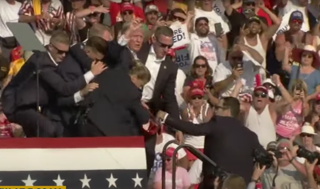
Gilley points to several incidents, including two assassination attempts against former President Donald Trump and a gunman arrested in 2022 for planning to assassinate conservative Supreme Court justices. He notes that in the past two decades, attempts on the lives of members of Congress have resulted in serious injuries to one Republican and one Democrat, highlighting a perceived imbalance in political violence.
In June 2023, the murder of Minnesota House Speaker Melissa Hortman and her husband was attributed to a deranged individual with no political motives, despite claims from some left-leaning commentators that it was politically motivated. Gilley emphasizes that this incident exemplifies a broader trend where left-wing narratives seek to frame violence as a right-wing problem.
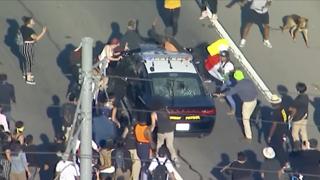
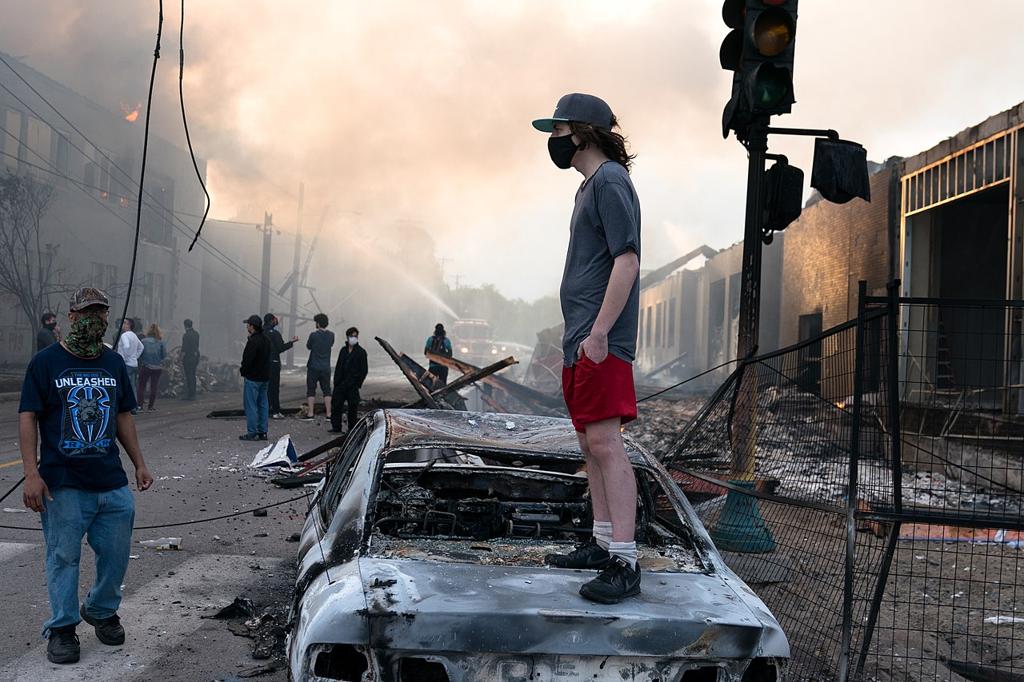
The professor cites three significant instances of political violence in recent years: the Women’s March protests during the Kavanaugh hearings in 2018, the Black Lives Matter riots in 2020, and the January 6 Capitol assault. He notes that the BLM protests resulted in over 10,000 arrests and numerous assaults on law enforcement, while the Capitol incident led to 1,575 arrests and two fatalities.
Critics of Gilley’s position argue that data shows lethal left-wing violence has been a smaller problem compared to right-wing terrorism since 9/11. Peter Bergen, an expert at the left-leaning New America, stated, "The data since 9/11 shows that lethal left-wing violence has been a much smaller problem than right-wing terrorism." (PNAS)
Gilley counters this by asserting that the majority of political murders in the U.S. are committed by Islamic radicals, a point he believes is often overlooked in discussions about political violence. He cites various high-profile attacks, including the 2016 Orlando nightclub shooting and the 2015 San Bernardino attack, as examples of the threat posed by radicalized individuals.
The debate extends to how political violence is classified. Gilley criticizes several studies and databases that he claims misrepresent the nature of political violence by labeling incidents as right-wing when they do not fit that narrative. He argues that these classifications often ignore the motivations behind the actions of individuals involved in violent incidents.
The ongoing discourse on political violence raises questions about the accuracy of data and the implications for law enforcement. Gilley warns that mischaracterizing the sources of political violence can lead to misdirected law enforcement efforts and public skepticism about research findings.
As the conversation continues, it remains to be seen how these differing perspectives on political violence will shape future discussions and policy responses. Gilley concludes, "The way to end political violence in America is to first get serious about the facts." (PNAS)