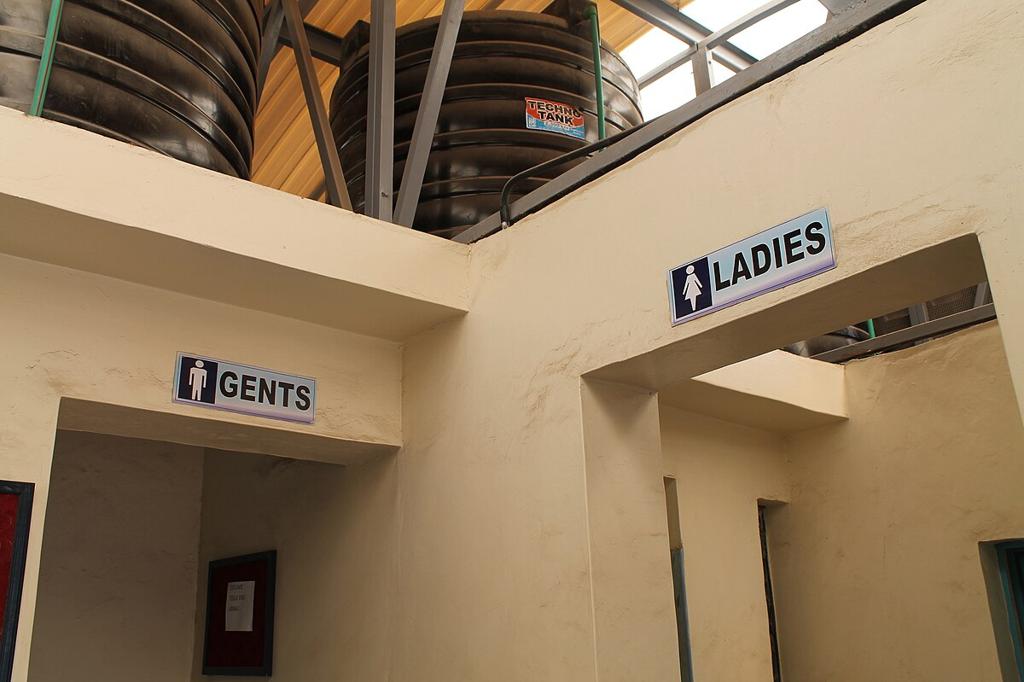
On Wednesday, the U.S. Supreme Court declined to block a lower court order authorizing a trans-identifying South Carolina student to use the school bathroom of her choice.
Explainer Navigating Virginia's Electoral Landscape: Key Issues and Reforms
In an unsigned order, the high court rejected an emergency request from South Carolina to stay a temporary order by the 4th Circuit Court of Appeals. That ruling, as described by left-wing SCOTUSblog, "requires a South Carolina school district to allow a transgender student to use the boys’ bathroom while the teen’s challenge to a state law that requires students to use the bathrooms that correspond to their biological sex" (U.S. Supreme Court) continues to make its way through the courts.
The requirement was reportedly first included in a 2024-2025 spending package passed by South Carolina’s Republican-controlled General Assembly. The limitation was further renewed in the state’s most recent funding measure, which took effect on July 1, according to CBS News.
The Supreme Court specified that its denial of South Carolina’s application "is not a ruling on the merits of the legal issues presented in the litigation." (U.S. Supreme Court) "Rather," the high court said, "it is based on the standards applicable for obtaining emergency relief from this Court."
Associate Justices Clarence Thomas, Samuel Alito, and Neil Gorsuch would have granted South Carolina’s request to block the 4th Circuit’s ruling. Had a majority of justices sided with the state, the school district would have been permitted to enforce its requirement that students use bathrooms corresponding with their sex.
Litigation in the case will continue to take place in the lower courts.
Wednesday’s decision comes a month before the start of the Supreme Court’s October 2025 term, during which the justices are expected to consider a pair of trans-related cases. As The Federalist previously reported, the high court will consider whether state laws prohibiting trans-identifying men from competing in women’s sports violate the 14th Amendment’s equal protection clause, or, in one case, Title IX protections.
The court’s announcement that it would be hearing arguments in the cases came weeks after it upheld a Tennessee law prohibiting certain “trans” procedures from being conducted on minors. Writing for the majority (6-3) in U.S. v. Skrmetti, Chief Justice John Roberts noted that the statute "does not violate equal protection guarantees," (U.S. Supreme Court) and that the issue is best reserved for the American people’s judgment.
"Questions regarding the law’s policy are thus appropriately left to the people, their elected representatives, and the democratic process," (U.S. Supreme Court) Roberts wrote.