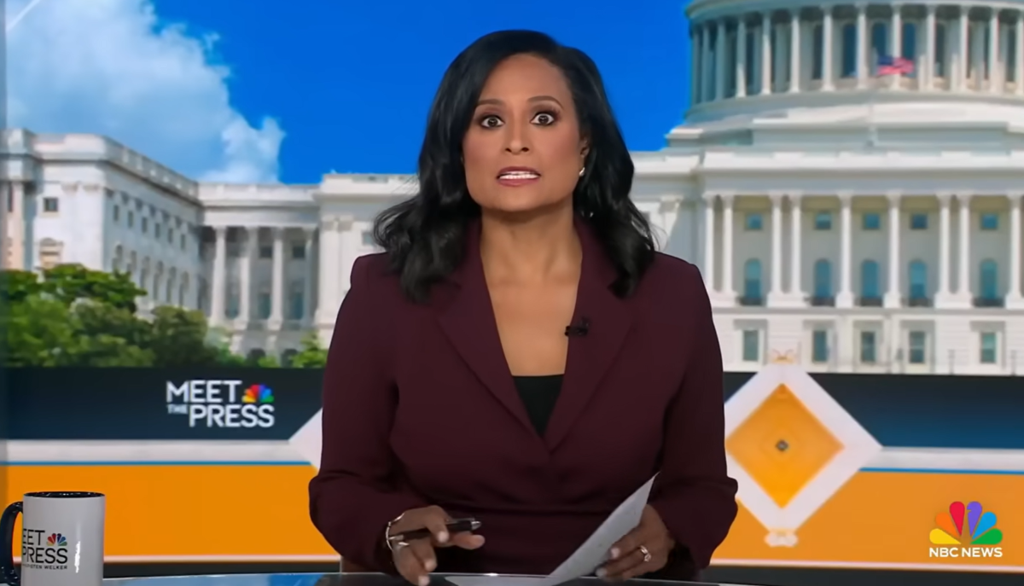
During a recent episode of "Meet the Press," (Uscis) host Kristen Welker engaged Treasury Secretary Scott Bessent in a discussion about the current state of the U.S. job market and the impact of tariffs on American companies. Welker pointed out that the U.S. has lost 42,000 manufacturing jobs since the announcement of tariffs by President Trump, questioning whether this indicates a failure of the administration's economic policy.
Bessent defended the administration's approach, stating that the economy is stronger than the latest jobs report suggests. However, Welker pressed him on the implications of tariffs, citing reports from companies like John Deere and Nike that indicated significant financial losses attributed to these tariffs. She highlighted that John Deere's net income had dropped by 29% and that the company had laid off employees as a direct consequence of the tariffs.
Welker continued to challenge Bessent, asking if he acknowledged that these tariffs effectively act as a tax on American consumers. She referenced a Goldman Sachs report indicating that 86% of tariff revenue has been paid by American businesses and consumers, seeking clarity on whether the administration recognized the economic burden these tariffs impose.
In a contrasting segment, Welker spoke with Maryland Governor Wes Moore, who addressed the ongoing crime issues in Baltimore and the potential federal response to urban violence. Moore was asked about President Trump's offer to send in federal troops to assist with law enforcement in cities like Baltimore, which has one of the highest murder rates in the nation. Moore did not commit to accepting federal assistance, emphasizing local efforts to combat crime.
The discussion also touched on the political landscape as both parties prepare for the upcoming midterm elections. Moore was questioned about the potential for redistricting in Maryland, particularly in light of criticisms from former Governor Larry Hogan regarding partisan gerrymandering. Moore's responses indicated a cautious approach to the issue, aiming to balance political pressures with fair representation.
Overall, the episode highlighted the complexities of economic policy, public safety, and political strategy as the nation navigates significant challenges leading into the midterms.