TLT Explains
FBI Disrupts Alleged Terror Plot Targeting UFC Event at White House Involving Explosive Drones
What's happening
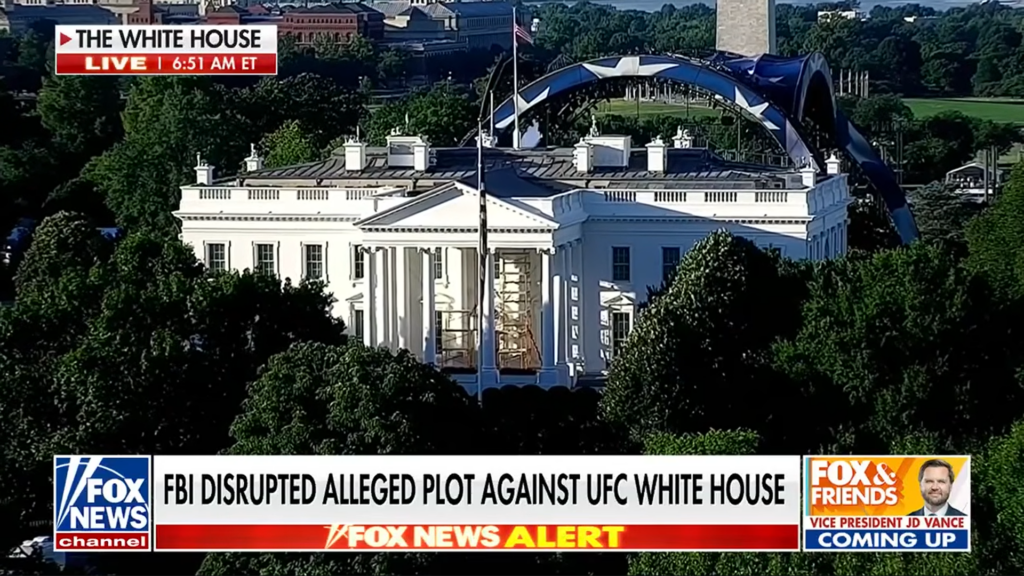
Federal authorities recently thwarted an alleged terrorist plot aimed at the UFC Freedom 250 event scheduled to take place at the White House, where former President Donald Trump was expected to attend. The FBI revealed that the conspirators planned to use drones equipped with explosives to create widespread chaos, thereby facilitating an attack on the venue. This intervention underscores heightened concerns about domestic terrorism and the vulnerability of high-profile public events to violent acts. Law enforcement officials described the plot as a coordinated effort designed to force a mass evacuation and funnel crowds toward a sniper team positioned nearby, highlighting the calculated nature of the threat.
The investigation has led to the arrest of at least five individuals, with authorities identifying an additional 23 persons potentially involved in the network behind the plot. Many suspects reportedly used the encrypted messaging app Signal to communicate, suggesting a degree of operational security and planning intended to evade detection. The use of such platforms is common among groups seeking to coordinate illicit activities while minimizing exposure to law enforcement surveillance. Court documents further reveal that some suspects, including a key figure named Thomas, subscribe to conspiracy theories linking Trump to child predator networks associated with Jeffrey Epstein, illustrating how misinformation can fuel extremist motivations.
This alleged plot emerges amid a broader context of increasing threats and violence directed at political figures, particularly those with polarizing public profiles. Recent incidents, such as an armed individual breaching security at the White House Correspondents Dinner, have amplified concerns about the safety of public officials and event attendees. These events reflect a troubling trend of politically motivated violence and underscore the challenges faced by security agencies in protecting high-profile gatherings. The involvement of younger suspects, including a 19-year-old who reportedly used graduation money to acquire weapons, raises additional alarms about the influence of extremist ideologies on youth and the potential for radicalization.
What's at stake
The main actors in this case include the arrested suspects facing serious charges such as conspiracy to commit murder, which carry significant legal consequences if proven. Bryan Omar Roa and Tycen Proper are among those charged, with authorities emphasizing the severity of their alleged roles in the plot. The FBI's swift action to disrupt the plan demonstrates the agency's commitment to countering domestic terrorism threats before they can materialize into actual harm. However, the case also highlights the complex interplay between conspiracy-driven beliefs and violent intentions, complicating efforts to prevent such attacks while respecting civil liberties.
The stakes of this incident extend beyond the immediate threat to the UFC event and the White House. It raises broader questions about the security of public events attended by prominent political figures and the potential for extremist groups to exploit political tensions. The plot's design to manipulate crowd movements toward a sniper team illustrates a disturbing level of tactical planning aimed at maximizing casualties and chaos. This scenario poses significant risks not only to the intended targets but also to bystanders and law enforcement personnel tasked with maintaining order. The incident serves as a stark reminder of the evolving nature of domestic threats in a politically charged environment.
Reactions to the disruption of the plot have been mixed, with some observers emphasizing the dangers posed by conspiracy theories and extremist rhetoric in fueling violence. Others caution against politicizing the investigation, noting the importance of distinguishing between legitimate security concerns and exaggerated narratives. Supporters of former President Trump have largely refrained from commenting on the specific allegations linking him to Epstein-related conspiracy theories, possibly to avoid further inflaming tensions. Meanwhile, law enforcement agencies continue to balance the need for vigilance with the challenges of addressing threats that intersect with complex political and social dynamics.
Looking ahead, authorities are expected to maintain heightened surveillance and security measures at upcoming events involving high-profile figures to prevent similar plots from advancing. The ongoing investigation will likely result in additional arrests or charges as more information emerges about the network behind the plan. Public safety officials face the difficult task of adapting to increasingly sophisticated and unconventional methods of attack, such as the use of explosive drones. The situation also calls for continued efforts to counter misinformation and extremist narratives that can inspire violent actions. Monitoring developments in this case will be crucial in understanding how domestic terrorism threats evolve and how best to respond to them in the future.
Why it matters
The plot aimed to cause mass panic and direct crowds toward a sniper team, increasing potential casualties. Use of encrypted messaging app Signal indicates coordinated and secretive planning among suspects. The involvement of conspiracy theories highlights how misinformation can motivate extremist violence.
Younger individuals' participation raises concerns about radicalization and recruitment of youth. The incident underscores ongoing risks to public safety at politically significant events. Law enforcement agencies are intensifying efforts to detect and disrupt domestic terrorism plots.
The case illustrates challenges in balancing security measures with political and social sensitivities.
Key facts & context
Federal authorities disrupted a terrorist plot targeting the UFC Freedom 250 event at the White House. Former President Donald Trump was expected to attend the UFC event targeted in the plot. The plan involved using drones loaded with explosives to create chaos and facilitate an attack.
At least five individuals have been arrested, with 23 others identified as part of the network. Suspects communicated primarily through the encrypted messaging app Signal. Key suspects face charges including conspiracy to commit murder.
Some plotters subscribed to conspiracy theories linking Trump to Jeffrey Epstein-related allegations. Recent related incidents include an armed breach at the White House Correspondents Dinner. One suspect reportedly used graduation money to purchase firearms and ammunition for the attack.
The FBI's intervention highlights ongoing efforts to address domestic terrorism threats. The plot was designed to force a mass evacuation and funnel crowds toward a sniper team. Law enforcement continues to monitor potential threats ahead of future high-profile events.
Timeline & key developments
2026-06-16: FBI Disrupts Alleged Terror Plot Targeting UFC Event at White House. Additional reporting on this topic is available in our broader archive and will continue to shape this timeline as new developments emerge.
Primary sources
Further reading & references
- (Additional background links will appear here as we cover this topic.)
Related posts
- Wisconsin Brewery Owner's Threatening Social Media Posts Draw FBI and Secret Service Scrutiny
- FBI Under Biden Reportedly Obtained Phone Records of Trump Campaign Officials in 2024
- FBI Surveillance of Trump Allies Sparks Controversy Amid Quiet from Democratic Lawmakers
- After MI Terror Threat, Dearborn Councilman Won't Criticize Hamas
- Arctic Frost Docs Expose Breadth Of DOJ’s Weaponization
- Calls for Presidential Pardons for Trump Electors Amid Ongoing Legal Challenges