TLT Explains
Connecticut Lawmakers Debate House Bill 5468 to Increase Oversight of Homeschooling Families
What's happening
Connecticut is currently considering House Bill 5468, a legislative proposal that would introduce significant government oversight on homeschooling families across the state. The bill mandates that families submit in-person paperwork before starting homeschooling and requires annual documentation of their children’s educational progress. This marks a departure from the state’s longstanding hands-off approach to homeschooling regulation, which has allowed families considerable freedom in how they educate their children at home.
The core issue at the heart of this legislation is the balance between protecting children and respecting parental rights. Proponents of the bill argue that increased oversight is essential to ensure that homeschooled children receive a quality education and are protected from neglect or abuse. They believe that state involvement can provide necessary safeguards and accountability. On the other hand, critics contend that the bill infringes on parental freedoms and imposes unnecessary bureaucratic hurdles that do not effectively address child safety concerns.
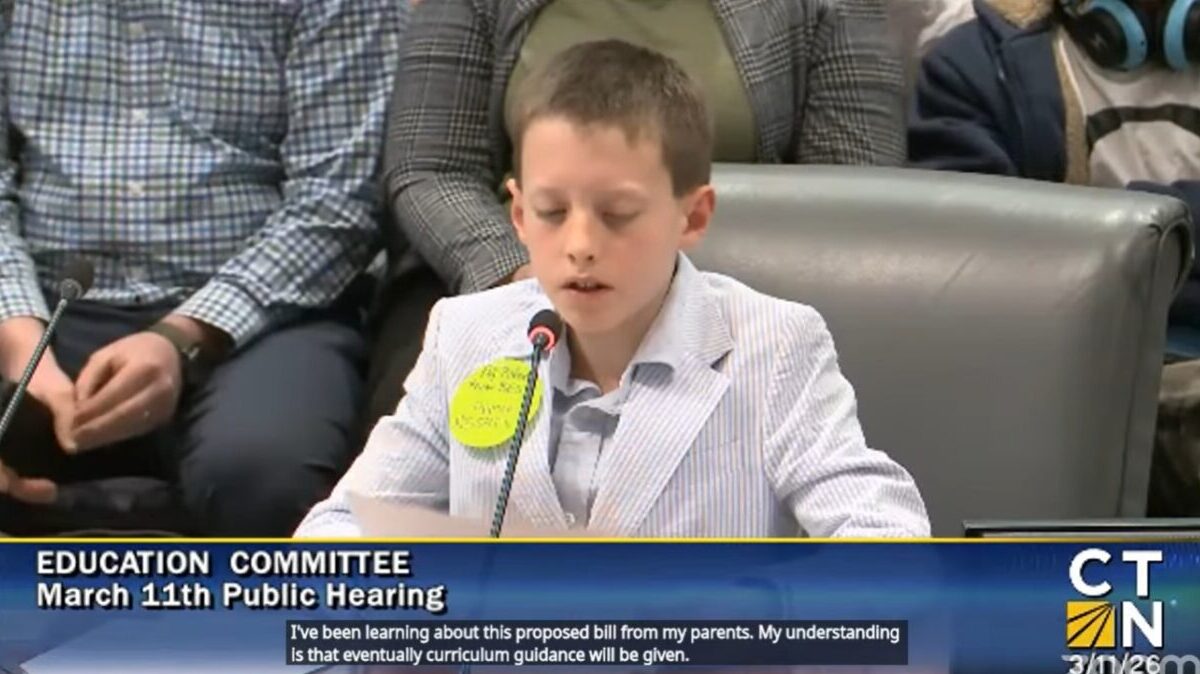
During a public hearing before the Connecticut Education Committee that lasted nearly 19 hours, hundreds of parents, students, and educators voiced their opposition to the bill. Many testified that the proposed regulations would fundamentally change the relationship between the state and homeschooling families, creating an atmosphere of surveillance rather than trust. Concerns were raised that the bill’s requirements, such as annual progress reports and mandatory approval from the Department of Children and Families (DCF) before withdrawing a child from public school, would create administrative burdens without clear benefits.
One notable provision of House Bill 5468 requires families to obtain approval from the DCF prior to withdrawing a child from public school to begin homeschooling. The department would review any prior involvement with the family before allowing the withdrawal to proceed. Critics, including Ralph Rodriguez, an attorney with the Home School Legal Defense Association, argue that this shifts the presumption of innocence by requiring parents to seek government permission to exercise their constitutional right to homeschool. Rodriguez described the bill as creating a bureaucratic paper trail that fails to address actual risk factors for child harm.
What's at stake
The bill has drawn opposition from a broad coalition that includes homeschooling advocates, public school teachers, school officials, and local superintendents. Even a DCF investigator testified against the bill, highlighting the lack of support for expanded regulatory authority from those tasked with enforcing it. The debate reflects deep divisions over how best to ensure child welfare while respecting family autonomy, with many questioning whether increased government oversight is the appropriate solution.
During the hearing, one of the committee’s co-chairs referenced New Hampshire’s homeschool regulations as a potential model for Connecticut. However, a Connecticut mother pointed out that New Hampshire’s House of Representatives had recently voted to repeal similar regulations, including notification requirements and annual evaluations. This contrast between states raises questions about the direction Connecticut is taking compared to other states that are moving toward deregulation rather than increased oversight.
Supporters of House Bill 5468 emphasize the importance of child protection and argue that state supervision can help identify and prevent neglect or educational neglect. They maintain that homeschooling, while beneficial for many families, requires some level of accountability to ensure children’s well-being. Opponents counter that research does not show homeschooling is linked to higher rates of abuse or neglect. Instead, factors such as domestic violence, substance abuse, and poverty are more significant predictors of child maltreatment, regardless of the education setting.
The proposed bill has galvanized a grassroots movement among homeschooling families and their allies who argue that Connecticut’s current system has successfully allowed parents to tailor education to their children’s needs without government interference. They warn that bureaucratic oversight could undermine the flexibility and individualized attention that homeschooling offers. As the debate continues, it remains uncertain how lawmakers will respond to the widespread opposition and concerns raised during the hearing.
Looking ahead, the Connecticut Education Committee is expected to continue deliberations on House Bill 5468 in the coming months. Advocates on both sides of the issue are closely monitoring developments as the state weighs the complexities of education policy and child welfare. The outcome will have significant implications for homeschooling families in Connecticut, potentially reshaping the regulatory landscape and influencing how parental rights and child protection are balanced in the future.
Why it matters
House Bill 5468 would impose new government oversight on homeschooling families in Connecticut. The bill requires families to obtain approval from the Department of Children and Families before withdrawing children from public schools. This oversight includes annual documentation of educational progress, reversing decades of minimal regulation.
The legislation raises concerns about balancing child protection with parental rights and educational freedom. Connecticut’s approach contrasts with states like New Hampshire, which recently repealed similar homeschooling regulations.
Key facts & context
House Bill 5468 mandates in-person paperwork filing before families can begin homeschooling. Families must submit annual documentation of their children’s educational progress under the bill. The Department of Children and Families would review prior involvement before approving withdrawal from public school.
The bill has faced opposition from homeschooling advocates, educators, and even some DCF personnel. Connecticut has historically maintained a hands-off approach to homeschooling regulation. New Hampshire’s House of Representatives recently voted to repeal notification and evaluation requirements for homeschoolers.
Critics argue that the bill creates bureaucratic hurdles without effectively addressing child safety risks. Supporters contend that increased oversight is necessary to ensure quality education and protect children from neglect. Research indicates that factors like domestic violence and poverty are more predictive of child maltreatment than homeschooling status.
The Connecticut Education Committee held a nearly 19-hour hearing with hundreds of participants expressing their views. The bill’s future remains uncertain as lawmakers continue to weigh competing concerns of safety and parental rights.
Timeline & key developments
2026-03-23: Connecticut Education Committee Considers Bill to Regulate Homeschooling. Additional reporting on this topic is available in our broader archive and will continue to shape this timeline as new developments emerge.
Primary sources
Further reading & references
- (Additional background links will appear here as we cover this topic.)