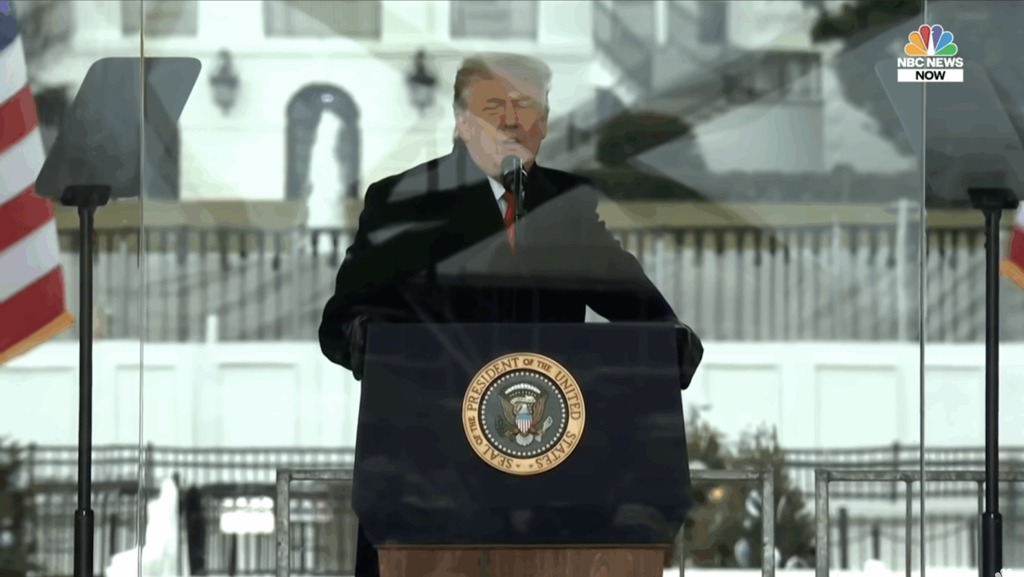
Tim Davie, the director-general of the BBC, resigned on Sunday following the network's airing of doctored footage of President Donald Trump speaking to supporters on January 6, 2021. In a statement, Davie accepted "ultimate responsibility" for the errors made in a documentary that misrepresented Trump's remarks, suggesting he incited the storming of the Capitol. The edited footage omitted Trump's call for supporters to "peacefully and patriotically make" their voices heard.
The BBC's resignation marks a rare instance of accountability in media, particularly regarding coverage of Trump. Critics argue that in the United States, media outlets often face no repercussions for disseminating misleading information about the former president.
The controversy surrounding the BBC's actions has reignited discussions about the integrity of reporting on Trump. The network's decision to resign stands in stark contrast to the American media landscape, where many journalists who promoted false narratives about Trump have continued their careers without consequence.
One prominent example is the 2016 Russia collusion narrative, which was fueled by the now-debunked Steele dossier. Despite warnings from intelligence experts about its credibility, the dossier was included in a 2017 Intelligence Community Assessment led by then-President Barack Obama. This assessment linked Trump and his campaign to Russian interference in the election, a claim that has since been widely discredited.
In 2017, PolitiFact named Trump's assertion that Russian election interference was a "made-up story" as its "Lie of the Year." The narrative persisted, with several media outlets, including The New York Times and The Washington Post, publishing articles that reinforced the collusion claims.
Another significant incident occurred weeks before the 2020 presidential election, when Politico reported on a letter signed by 51 former intelligence officials. The letter claimed that information from Hunter Biden's laptop had "all the classic earmarks of a Russian information operation." This narrative was later used by then-candidate Joe Biden during a debate to deflect criticism regarding his family's business dealings.
In a recent congressional testimony, Michael Morell, a former CIA deputy director, revealed that Antony Blinken, a Biden campaign official, had reached out to him about the laptop story. Morell confirmed that the statement asserting the laptop was part of a Russian disinformation campaign was motivated by a desire to help Biden.
Additionally, reporting by The New York Times regarding alleged Russian bounties on U.S. troops in Afghanistan was later discredited. The story claimed that American intelligence officials had briefed Trump on these bounties, but it was later confirmed that he had not been informed.
The media's portrayal of Trump's comments following the 2017 Charlottesville rally also faced scrutiny. Many outlets mischaracterized his statement about "very fine people on both sides," which he clarified did not include neo-Nazis or white nationalists.
As the BBC takes steps toward accountability, the question remains whether U.S. media will follow suit. While the BBC's resignation reflects a commitment to journalistic integrity, many American journalists continue to thrive despite their roles in promoting misleading narratives about Trump.