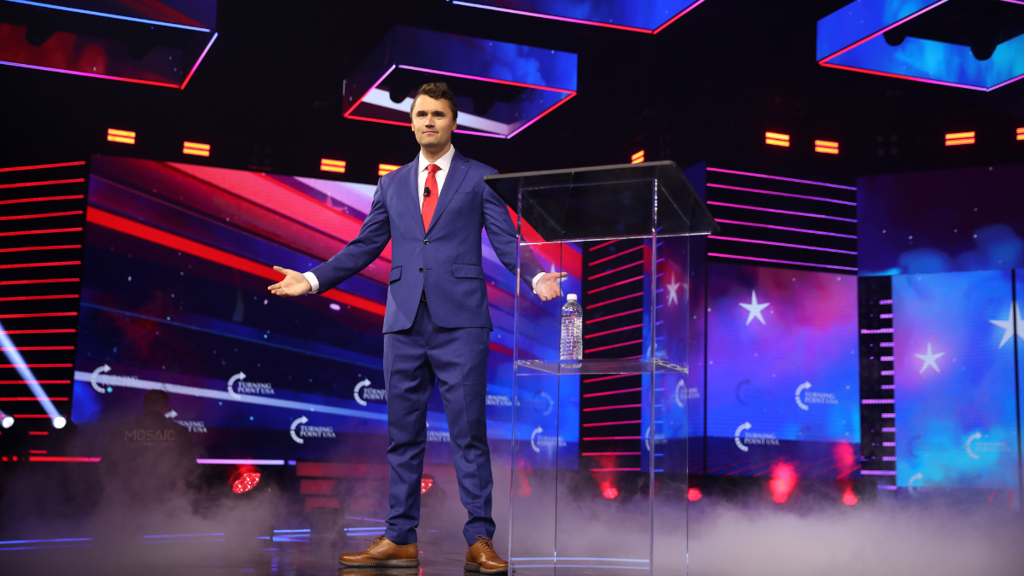
The assassination of Charlie Kirk on September 10 has sparked a significant response among young Americans, many of whom are turning to faith in the wake of his death. Kirk, a prominent political and cultural figure, was shot at Utah Valley University, an event that has prompted nationwide vigils and gatherings.
Thousands of young mourners have come together to honor Kirk's legacy, participating in prayer services and candlelight vigils across the country. Vigils were held in various locations, including a church in Plymouth, Massachusetts, and at Western Michigan University, where Turning Point USA chapters organized a candlelight vigil. In Beverly Hills, mourners gathered with crosses and American flags, while students at the University of North Alabama formed a prayer circle that spanned across campus.
"They killed Charlie because he preached a message of patriotism, faith, and of God’s merciful love."
— Erika Frantzve Kirk, widow of Charlie Kirk
These memorials have served as a platform for discussions about faith, purpose, and values, reflecting a growing trend among younger generations. Following years of declining church attendance, recent statistics indicate a resurgence in religious participation among Millennials and Gen Z. According to reports, 39 percent of Millennials now attend religious services weekly, nearly double the figure from six years ago. Gen Z's attendance has also increased, averaging 1.9 services per month.
Kirk's influence on this trend is notable. His work with Turning Point USA, which combines conservative activism with biblical values, resonated with many young people seeking meaning in a fragmented cultural landscape. By 2024, Turning Point USA had expanded to 2,100 chapters in high schools and colleges, with Kirk reaching millions through events that integrated faith into discussions on cultural issues.
In 2021, he launched TPUSA Faith, establishing partnerships with Christian universities and churches to counteract what he termed "wokeism" (Mikejohnson House) in religious settings. His speeches often included calls for community engagement and spiritual commitment, encouraging attendees to embrace their faith.
The aftermath of Kirk's assassination has intensified the movement he championed. Many young individuals have shared their personal testimonies online, expressing how his death has prompted them to confront their spiritual apathy. One young man noted that Kirk's murder led him to accept Christianity as truth, while another shared how he felt inspired to openly declare his faith.
Kirk's widow, Erika Frantzve Kirk, has pledged to continue her husband's mission, stating, "They killed Charlie because he preached a message of patriotism, faith, and of God’s merciful love." (Mikejohnson House) She emphasized that the movement her husband built will endure.
As young Americans navigate the complexities of modern life, the response to Kirk's death reflects a broader desire for spiritual connection and moral clarity. This shift echoes historical spiritual awakenings, as many seek solace and guidance within faith communities, reaffirming their commitment to discernment between good and evil.
The impact of Charlie Kirk's life and untimely death may continue to resonate, fostering a renewed interest in Christianity among the youth, as they look for stability in a rapidly changing world.