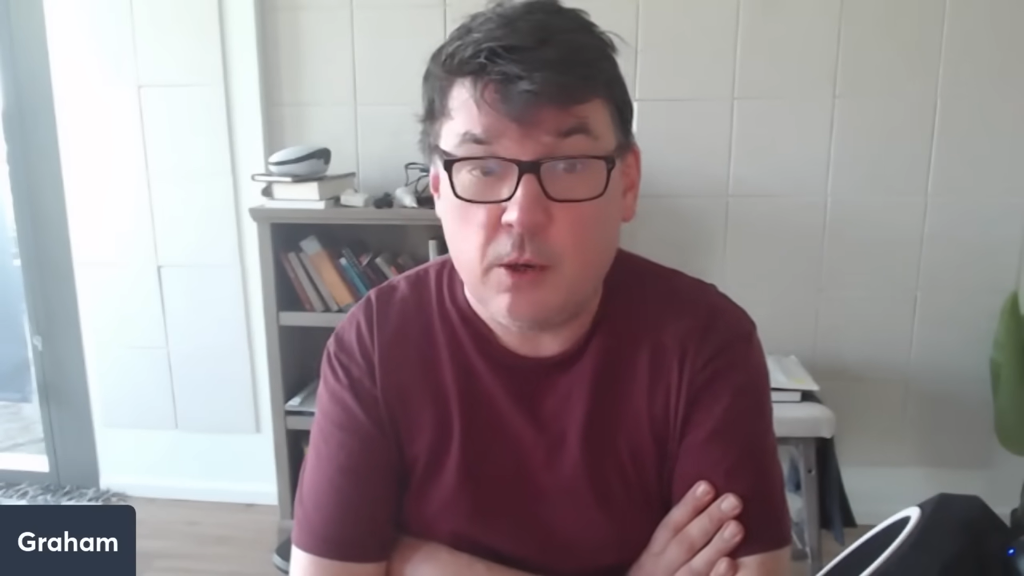
Graham Linehan, an Irish comedian known for creating popular sitcoms such as "Father Ted" (Telegraph Co) and "The I.T. Crowd," was arrested at Heathrow Airport by five police officers on September 2, 2025. His arrest has raised significant concerns regarding free speech in the United Kingdom, particularly in relation to online expression.
Explainer Free Speech Battles: Courts, Censorship, and Cultural Conflicts
Linehan's arrest reportedly stemmed from three tweets criticizing the transgender movement. Critics argue that the U.K. has increasingly adopted stringent measures against free speech, likening the situation to an Orwellian police state. According to reports, the U.K. arrests approximately 30 individuals daily for online speech, with penalties that some view as disproportionately harsh.
In one notable case, a woman received a 31-month prison sentence for an offensive tweet that was deleted shortly after posting. In contrast, another individual involved in a violent incident received a lesser 21-month sentence. These examples have led to accusations of a two-tiered justice system in the U.K., where online speech is met with severe consequences.
Linehan's arrest has drawn attention not only for its implications on free speech but also for the potential backlash against the U.K. government. J.K. Rowling, another prominent critic of the transgender movement, previously challenged Scottish authorities to arrest her under similar laws, which they declined to do, likely due to the public relations fallout.
"The arrest of Graham Linehan highlights the urgent need for reform in the U.K.'s speech laws," (Telegraph Co) said Mark Hemingway, a commentator on free speech issues. "This incident should serve as a wake-up call for Americans to advocate for free speech both domestically and internationally."
Supporters of Linehan argue that his arrest is emblematic of a broader trend of suppressing dissenting voices in the U.K. They contend that the current legal framework stifles legitimate discourse and criticism, particularly regarding contentious social issues.
Conversely, some advocates for stricter speech regulations argue that such laws are necessary to protect marginalized communities from harm. They assert that the balance between free expression and the protection of individuals from hate speech is crucial in a diverse society.
The implications of Linehan's arrest extend beyond the U.K., prompting discussions in the United States about the importance of safeguarding free speech. Critics of censorship in America point to the First Amendment as a critical distinction that protects individuals from similar legal repercussions.
As the debate continues, many are calling for a reassessment of how free speech is defined and protected in both the U.K. and the U.S. The situation underscores the ongoing struggle between freedom of expression and the regulation of speech in an increasingly polarized environment.