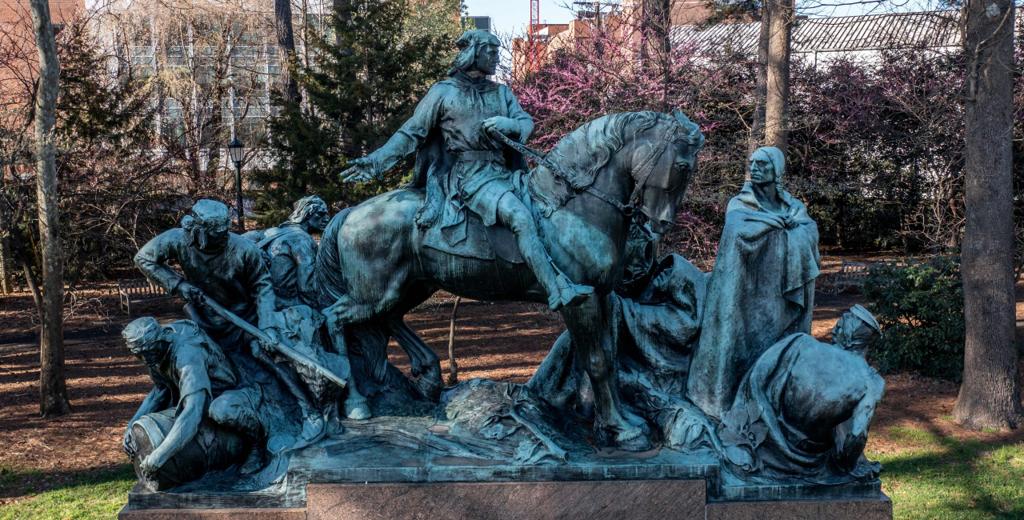
The University of Virginia (UVA) is set to replace the statue of Revolutionary War hero Brigadier General George Rogers Clark with a new park that will serve as a land acknowledgement to the Monacan Indian tribe. This decision follows the statue's removal in 2021 as part of a broader discussion on race and equity, according to university officials.
UVA spokesperson Bethanie Glover stated that the park's design aims to interpret the "deep history of the Commonwealth, its people, and landscape." The plans have been reviewed by the Virginia Art and Architecture Review Board and the Virginia Department of Historic Resources, as well as the school's Board of Visitors.
Critics of the removal, including Ann H. McLean, a Virginia resident and art historian, argue that the decision reflects a troubling trend in the university's approach to its historical figures. "The politicization of the university has reached a level of absurdity as it has gleefully destroyed statues of Virginians," McLean told The Federalist. She expressed concern that the park would prioritize Indigenous practices over the contributions of figures like Clark.
Clark, known as the "Conqueror of the Old Northwest," played a significant role in the U.S. gaining territory in the Northwest Territory through the Treaty of Paris. His statue was part of a collection of monuments that included depictions of Confederate generals Robert E. Lee and Thomas “Stonewall” Jackson, which were also removed amid ongoing debates about historical representation.
The removal of Clark's statue has drawn parallels to the broader movement to dismantle monuments perceived as controversial. Critics, including former President Donald Trump, have characterized these actions as part of a leftist agenda to erase American history. Trump previously stated, "They’re tearing down statues, desecrating monuments, and purging dissenters. It’s not the behavior of a peaceful political movement; it’s the behavior of totalitarians and tyrants."
The new park will focus on celebrating the Virginia landscape and Indigenous stewardship practices, a shift that some view as a departure from honoring the state's historical figures. McLean criticized this approach, stating, "Rather than teaching students full historical truth, the plans to glorify paganism represent both a backsliding and ingratitude for advances in western civilization."
The statue of Clark, which is currently in storage, was described by the Virginia Department of Historic Resources as a "masterful and complex work of art." The statue portrayed Clark with members of his expedition confronting an Indian chief, emphasizing the historical significance of his contributions.
UVA's decision to replace the statue with a land acknowledgement park reflects a growing trend in American universities to address historical injustices through public art and memorials. However, this approach has sparked debate over the balance between recognizing Indigenous history and honoring historical figures who played pivotal roles in American history.
As discussions continue about the future of historical monuments in the U.S., UVA's actions may serve as a case study in how institutions navigate the complexities of history, representation, and cultural values.