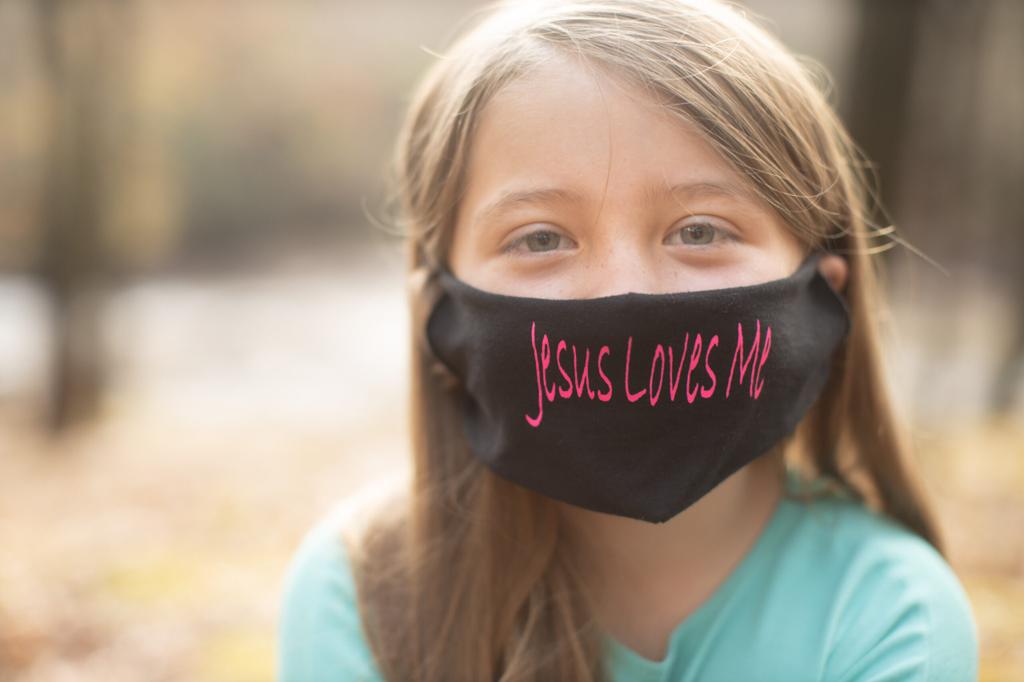
A third-grade student in Simpson County, Mississippi, has become a symbol of religious freedom after a legal battle over her right to wear a mask with the words "Jesus Loves Me" (CourtListener) during the COVID-19 pandemic. In a recent address to the Presidential Religious Liberty Commission, Lydia Booth recounted her experience of being told she could not wear the mask at school, which she initially wore without issue.
Explainer Free Speech Battles: Courts, Censorship, and Cultural Conflicts
Booth described how the mask provided her comfort during a difficult time, reminding her of her faith. However, after wearing it for several weeks, a computer lab teacher informed her that the mask was not allowed due to its wording. Confused and saddened, Booth shared the incident with her mother, who began investigating the school's policies.
After reviewing school directives and speaking with other parents, Booth's mother could not find any rule prohibiting masks with words. Despite this, the school principal later claimed that a handbook rule prevented religious statements on masks. When pressed for details, the principal was unable to locate the rule in the handbook.
In a subsequent conversation, the assistant superintendent acknowledged that the rule was not in the handbook but claimed it was part of the district's COVID Restart Plan. However, when Booth's mother compared the emailed version of the plan with the one on the school district's website, she discovered discrepancies, including a modification made shortly before their conversation.
This led Booth's family to file a lawsuit against the school district, asserting that their rights were being violated. The case drew attention to the broader issue of religious expression in public schools. After two years of legal proceedings, the school district eventually settled, allowing Booth to wear her mask and agreeing to protect the rights of all students to express their faith.
Booth, who was only nine years old at the time, emphasized the importance of speaking up for one's rights. "If I had stayed silent, nothing would’ve changed," (CourtListener) she stated. "But because we spoke up, now other students can wear messages of faith and love without fear of being silenced."
Her experience highlights the ongoing debate over religious expression in public education and the rights of students to express their beliefs freely. Booth's story serves as a reminder that even young voices can make a significant impact in the fight for liberty.