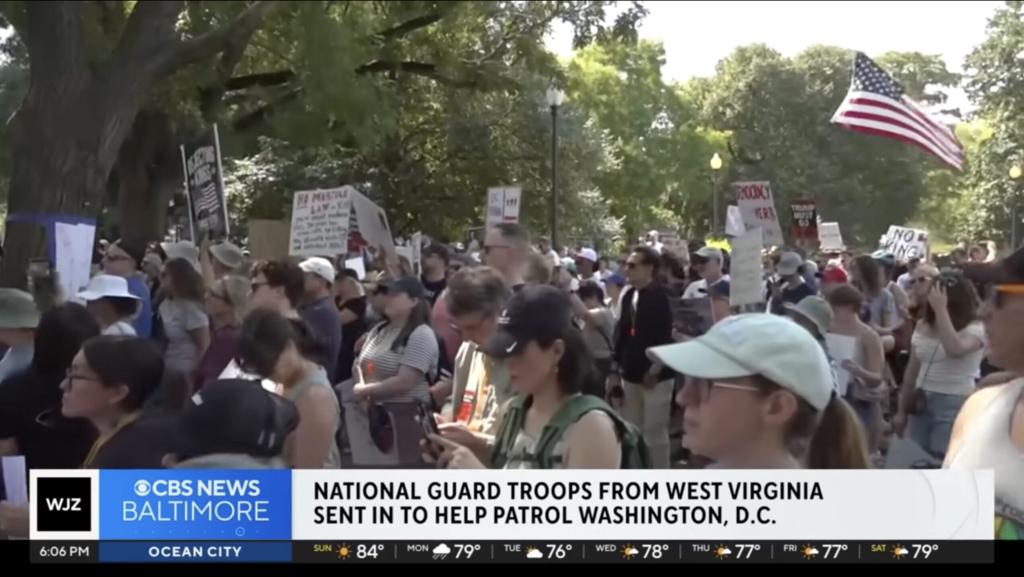
Debate over federal intervention in Washington, D.C. intensified after a local poll showed broad opposition to National Guard deployment while reported violent-crime trends moved downward in the same window. The political conflict is not only about crime totals. It is also about who should control public safety policy in the capital.
Explainer Public Safety and Crime Trends in America: Understanding the Landscape
The survey cited in coverage found strong local resistance to Guard presence, especially among residents who viewed the deployment as excessive federal intrusion. At the same time, public reporting highlighted short-term declines in several crime categories, creating a split between lived political sentiment and emerging crime data.
Why the argument is so heated
Opponents of deployment argue civil-liberties and local-governance concerns. Their position is that federal force visibility can increase mistrust and produce a perception of occupation rather than community policing.
Supporters argue that measurable reductions in homicides, carjackings, and robberies justify aggressive intervention when local conditions deteriorate. They frame the debate as outcome-first: if violence drops, the policy deserves credit.
Both claims can be partially true at once. Crime trends can improve while residents still reject the governing method. That tension is central to the D.C. dispute.
What the data can and cannot prove
Short windows are useful but limited. A one-week or one-month change can indicate momentum, but it cannot by itself establish full causation. Weather, policing shifts, offender behavior, prosecutorial decisions, and community responses can all move outcomes together.
That is why the stronger analytic question is persistence. Do reductions hold over multiple reporting periods? Do declines appear across neighborhoods or only in narrow zones? Are serious violent-crime categories moving together or diverging?
Readers tracking this issue should compare this report with related coverage on federal law-enforcement presence in D.C. and later political criticism of Guard deployment.
Governance question behind the crime question
Beyond statistics, the dispute exposes a structural conflict: local democratic control versus federal responsibility for safety in the nation's capital. D.C. residents and officials may see legitimacy through local consent. Federal policymakers may emphasize national-interest obligations when violence spikes.
Neither side can win this argument on narrative alone. Durable legitimacy requires both improved safety and transparent governance boundaries.
What to watch next
- Multi-month violent-crime trend consistency rather than one-off snapshots.
- Changes in resident sentiment after sustained results.
- Whether policy shifts from emergency posture to institutionalized strategy.
- Evidence of durable community-police cooperation rather than temporary suppression.
If the numbers hold and public trust improves, supporters gain a stronger case. If numbers regress or trust declines further, critics gain ground even if early drops were real.